Estonian education 2050
- A sense of belonging is a key driver of societal development. In education, it underpins the vitality and security of the entire system. When learners, teachers and communities feel that they are part of the education system rather than merely its users, trust is accompanied by a shared sense of responsibility.
- Education will increasingly be shaped by where decision-making authority lies: Are decisions centralised and system-centred or decentralised and people-centred?
- The vitality of Estonian education will depend on how we move through the education landscape – in a steady stride, a rampaging rush, cautious stealth or quick zigzags. Much depends on our ability to recognise the opportunities and risks associated with each mode of movement.
INTRODUCTION
The future is difficult to predict, but one thing is certain: children born in the year ChatGPT was launched will enter the first grade in 2028 or 2029 and begin university studies around 2040. Their patterns of information consumption will differ significantly from those of previous generations.
However, before turning to the future and sketching out the year 2050, it is worth pausing to look back at the world and Estonia over the past quarter century.
2000 In Estonia, 13,067 children are born; the e-Tax Board is launched. Almost all schools are connected to the internet with the support of the Tiger Leap programme (launched in 1996).
2001 Wikipedia and the Estonian Biobank are established; Estonia wins the Eurovision Song Contest.
2002 Estonia issues its first digital ID card.
2003 Skype is launched.
2004 Facebook is launched; Estonia joins the European Union and NATO.
2005 YouTube is launched.
2007 iPhone is launched.
2008 The global financial crisis hits.
2010 Instagram is launched.
2011 Zoom is launched; Estonia adopts the euro.
2013 ESTCube-1 reaches orbit; Bolt (formerly Taxify) is founded.
2016 TikTok is launched.
2017 Microsoft Teams is launched.
2018 The EU General Data Protection Regulation (GDPR) begins to apply.
2020 The Covid-19 pandemic.
2022 Russia launches its full-scale war against Ukraine; ChatGPT is released.
2024 In Estonia, 9,690 children are born. The transition to Estonian as the sole language of instruction begins in early childhood education and in grades 1 and 4.
2025 Estonia launches the AI Leap (TI-hüpe).
In this future-oriented chapter, we draw on both global and local trends to outline the possible development scenarios for Estonian education. The chapter consists of three parts: first, it introduces the trends shaping the future of education, followed by an explanation of the principles of scenario planning. The final section presents four future scenarios that help to identify possible development paths and the decisions we need to make today. Each scenario reflects a different trajectory for the development of Estonian education, inviting the reader to consider what kind of world we wish to live in and which developments we seek to avoid. How can the Estonian education system adapt to both global changes and local challenges?
THE PRINCIPLES OF SCENARIO PLANNING
Education, like society as a whole, operates in an increasingly unpredictable environment. Crises such as the Covid-19 pandemic and the Russia–Ukraine war have shown that our strategies must be more flexible. Rather than following a single predictable path, the key question is how well we can adapt to different situations. Educational institutions and ministries draw up strategic development plans, but alongside a strategic vision, potential major deviations or unexpected turns are rarely considered.
2020 OECD, ‘Back to the future of education’1
2022 PRAXIS, ‘Future scenarios for Estonia’s youth field’2
2023 Foresight Centre, ‘The future for the next generation of teachers: Trends and scenarios up to 2040’3
2024 European Commission, ‘Scenarios for the future of school education in the EU’4
According to futures studies researcher Sohail Inayatullah,5 we need to make sense of the continuities in our history and identify where breaks have occurred. Have changes unfolded gradually, or through abrupt leaps?
The purpose of scenarios is not to predict the future but to develop futures literacy – the ability to recognise trends, make sense of uncertainty and ask ‘what if …?’. This type of thought exercise is used by international organisations such as the OECD, IMF, UNICEF, NATO and the European Commission – not to identify a single correct future but to prepare for many.
The foundation of futures thinking lies in the ability to detect weak and strong signals – early signs of future trends.6 These are often unfamiliar or novel patterns that may, but do not necessarily, develop into broader trends. Below are a few examples from the field of education.
The first women entered universities in Europe and Estonia at the turn of the 20th century, but they were seen as exceptions. What went unnoticed was that this would become an irreversible social change, affecting not only university enrolment patterns, but also the labour market, the direction of research and the content of knowledge itself. Today, however, 60% of university students are women.7
While opportunities for online meetings and online learning had existed for a long time, the Covid-19 pandemic accelerated the digital revolution. At present, we can only ask: what if Covid-19 had not happened?
The Estonian education 2050 scenarios were developed in three stages:
I Horizon scanning: mapping global and local trends and signals on the basis of relevant literature.
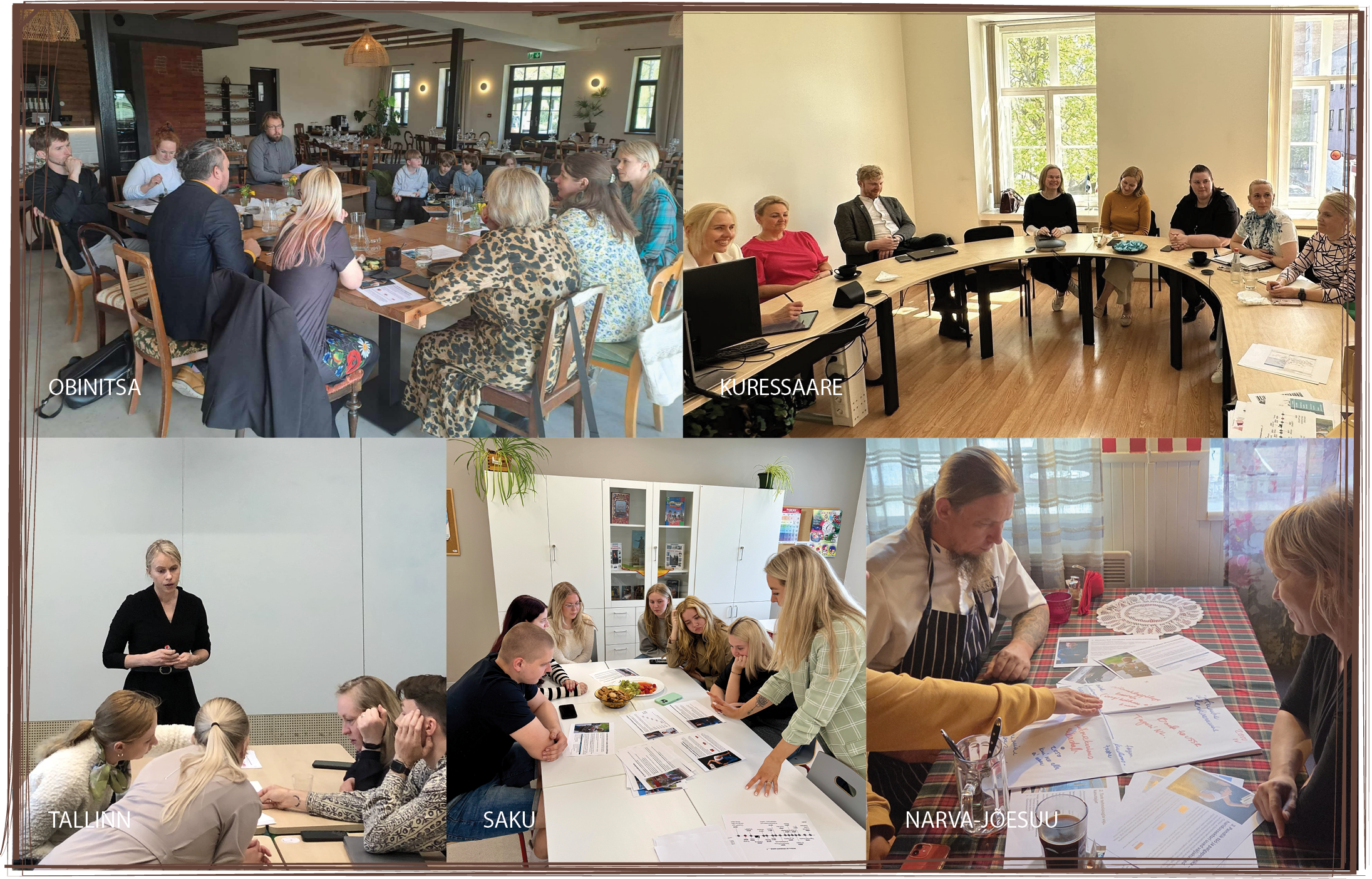
II Futures workshops: to understand regional specificities, five futures workshops were held between May and June 2025 in Kuressaare, Obinitsa, Saku, Narva-Jõesuu and Tallinn. Participants included school leaders, teachers, pupils, policymakers and active community members.
III 2 × 2 future scenarios: drawing on trends identified in the literature and input from the local futures workshops, four future scenarios for education were developed.
I HORIZON SCANNING: THE TRENDS SHAPING THE FUTURE OF EDUCATION
Horizon scanning is typically the first step in scenario development. Using frameworks such as PESTLE, it maps the social, technological, economic, environmental and other factors that may shape the future.8 Figure 8.1 presents six key trends that will influence the development of education in the near future, both globally and locally.
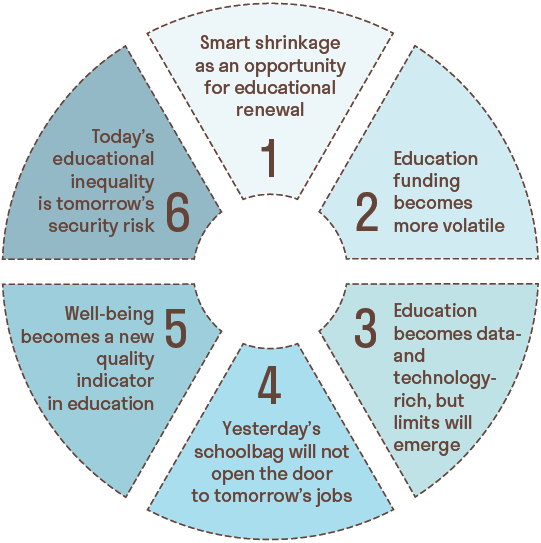
TREND 1. SMART SHRINKAGE AS AN OPPORTUNITY FOR EDUCATIONAL RENEWAL
Schools connect people across different stages of the life course. Since 1990, the number of births in Estonia has fallen by more than half; whereas more than 22,000 children were born annually at that time, the number of births remained below 10,000 in both 2024 and 2025. According to projections, Estonia’s population will decline over the next 25 years in almost all counties – with growth expected only in Harju County and Tartu County.9 However, over the coming decades, both internal and external migration may redraw the entire playing field – a settlement or region that is currently shrinking may begin to grow instead. Technological solutions and educational innovations also contain underappreciated potential that enables the education system to shrink in a smart way, so that population decline does not necessarily lead to school closures but may instead encourage a smart reorganisation of activities. For example, the OECD envisions future schools as community centres where both children and adults learn. In an ageing society, general education schools could also evolve into places for further training and retraining, with new roles that increase resilience to change.10
Education is increasingly a second or third career, entered later in life. Looking at global trends, it is becoming ever clearer that teaching or academic work is not always the first career choice for young people (Figure 8.2), but often a second or third step taken at a more mature age after a career change. This also calls for an updated understanding of future workforce supply – alongside young people, those who decide to contribute to education later in life must be deliberately engaged and supported. It is precisely they who bring to schools the life experience, awareness and stability that learners and schools increasingly need. Workforce supply in the education sector therefore involves not only recruiting young people but also providing targeted continuing education and support for adults later in life.

TREND 2. EDUCATION FUNDING BECOMES MORE VOLATILE
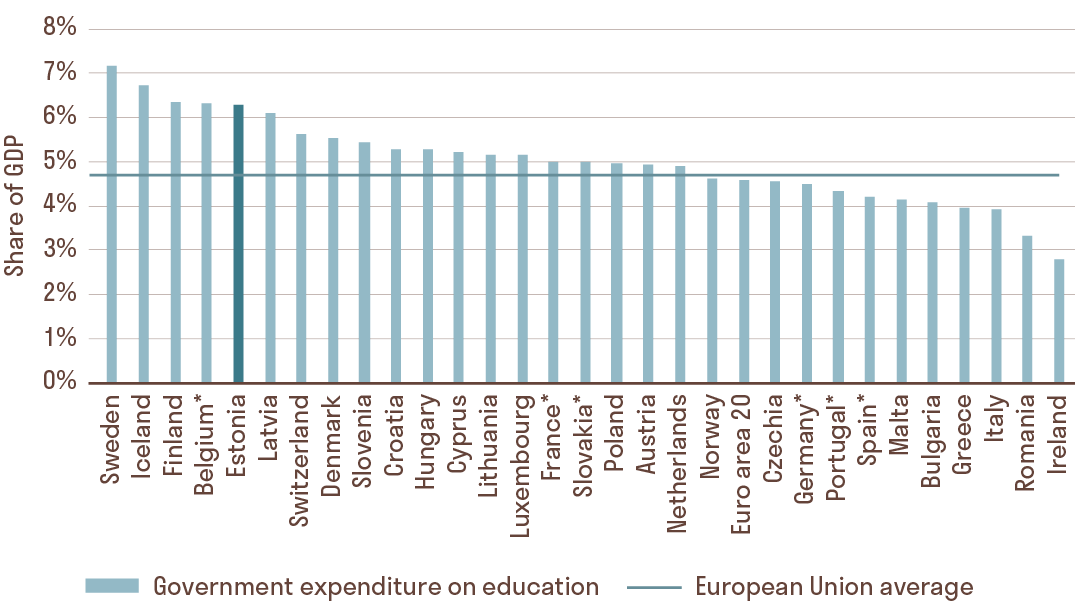
Declining birth rates and rising defence spending: risks to the long-term sustainability of education funding. Weaker-than-expected economic performance and rising defence expenditure may, in the coming years, call into question plans to increase state funding for general education. In the short term, the situation may be eased and public education expenditure reduced by the fact that over the past three years the birth rate has been lower than predicted. In the long term, however, a birth rate that is 4,500–7,500 lower than projected in 2022–2024 will accelerate population ageing and reduce Estonia’s revenue base by at least 750 million to 1.3 billion euros over the next 40–60 years. Population decline and falling tax revenues may result in Estonia being unable to maintain its current level of government education expenditure, which is high in international comparison (Figure 8.3).
The competitiveness of pay for education professionals varies across fields and regions. The attractiveness of teaching and academic careers depends on the competitiveness of pay in the education sector. Both wage premiums and wage penalties can be observed in teaching and academic professions.12 Specialists in science, technology, engineering and mathematics (STEM) and other technology-related fields – such as teachers of mathematics, physics or computer science – often forego the higher salaries they could earn in the private sector and thus experience a wage penalty when working in education.13For example, in Harju County a mathematics teacher with relevant qualifications working outside schools can earn as much as 150% more than the average wage of teachers in Estonian schools; in Tartu County the figure is 136%, and elsewhere in Estonia 130%.14 At the same time, some fields offer teachers or academic staff a relative wage premium because labour market alternatives are fewer or less well paid. Regional differences also matter: in Tallinn and Tartu, where the labour market is more diverse, the competitiveness of teachers’ pay is weaker, whereas in other regions teachers’ wages exceed the county average by more than a quarter.
TREND 3. EDUCATION IS ENRICHED BY DATA AND TECHNOLOGY, BUT LIMITS WILL EMERGE
The UN’s Human Development Report 2025 notes that instead of viewing artificial intelligence (AI) as an all-knowing authority, we need to learn to use it as a tool for inquiry, learning and creation – as an extension of curiosity, not a substitute for humans.17 At the same time, digital learning and administrative systems are making education an increasingly data-rich environment. We now have more data than ever before on learners, teachers and learning processes, which could support the prevention of educational problems, personalised learning and evidence-based education policy, while also reducing the administrative burden on teachers. However, the use of data is hindered (often justifiably) by strict data protection constraints, limited analytical capacity and low interoperability between systems.
Cyber threats and data security in education. More intensive data use also makes education more vulnerable – cyberattacks are commonplace, and the personal data of pupils, teachers and parents are an attractive target. As stated in the Estonian Internal Security Service’s annual review:18 ‘It is crucial to recognise that data, particularly personal data, is a valuable commodity.’ According to the Estonian Information System Authority,19 dozens of educational institutions in Estonia fall victim to cyberattacks every year. For schools, a cyberattack is not merely a technical incident – it can strike at the most critical moment: during examination periods, at the start of the school year or during assessment.
The education sector therefore faces a dual challenge: how to use existing data in a smart and responsible way while ensuring security, privacy and sustained trust in the digital education environment.
TREND 4. YESTERDAY’S SCHOOLBAG WILL NOT OPEN THE DOOR TO TOMORROW’S JOBS
AI and new technologies are rapidly transforming the world of work: some jobs disappear, new ones emerge, and the skills we need are changing quickly.20 This shift also affects education: what kind of future are we preparing people for? Between 10% and 20% of today’s occupations did not yet exist in the year 2000.21 For most people, the arrival of AI leads to job transformation and the creation of new occupations rather than job loss.22 According to the World Economic Forum, a modern professional may hold up to 20 different jobs over their lifetime – and future generations even more.23 Schools therefore need to start preparing young people for lives and careers that we are not yet able to describe.
Lifelong learning as the new norm: the rise of older learners and workers. By 2050, the number of people aged over 60 worldwide will exceed the combined number of children and young people aged 0–24.24 In Estonia, projections indicate that by the same year there will be 1.5 times more people aged over 60 than those aged 0–24.25 It is also important to note that today’s 70-year-old is not comparable to a 70-year-old a few decades ago. In 2022, the cognitive abilities of a 70-year-old were comparable to those of a 53-year-old in 2000, and their physical fitness to that of a 56-year-old in 2000.26 As a result, remaining in the labour market for longer is becoming the norm, and the profile of learners, including continuing learners, is therefore also likely to become more age-diverse.
The linear learning pathway of early adulthood is fading, giving way to a plurality of learning patterns. Some people study continuously while others take breaks lasting several years. Over the past decade, the share of graduates under the age of 30 has declined in both vocational education and higher education. In vocational education and at master’s level, graduates aged 30 and over already account for approximately half of all graduates, meaning that an increasing number of adults are returning to education or upgrading their skills later in life (Table 8.1). Learning is becoming distributed across the life course.
According to the World Economic Forum, the nature of work and careers is changing so rapidly that in the future, skills and the ability to learn on the job will matter more than diplomas alone.27

The OECD suggests that one possible future scenario for education is a world in which learning takes place everywhere and at all times – a world where the distinctions between formal and non-formal education disappear.29 The growing need for lifelong learning is clearly evident in Estonian higher education, where providers increasingly offer microcredentials, which are extended continuing education programmes with coherent content, based on degree-level courses. Estonians are also making active use of online self-development opportunities – in 2024, 40% of the population had participated in an online course. This placed Estonia seventh among European Union countries (the EU average was 33%).30
TREND 5. WELL-BEING EMERGES AS A NEW QUALITY METRIC IN EDUCATION
The quality of working life determines whether teachers remain in the profession. Teacher shortages are not caused solely by retirement. Voluntary exit from the profession is the main reason why teachers leave their jobs in Estonia, Austria, Denmark, England, Poland, Slovakia and Sweden.31 Work-related well-being is therefore key to teacher retention.
For the first time in history, five generations of workers are present side by side in the labour market,ᵃ particularly in education.32 In such an educational environment, promoting work-related well-being requires a thorough understanding of the needs and expectations of different generations.
Young people’s mental health is increasingly vulnerable, but specialists are in short supply. The Estonian Human Development Report 2023 noted that school-aged young people in Estonia experience sadness and depressive symptoms significantly more often than their peers in neighbouring countries.33 Approximately one in four full-time pupils in general education has special educational needs.34 At the same time, the availability of support specialists across Estonia’s education network is uneven and in many places critical. For example, in the 2024/25 academic year there were 18 children per speech therapist and 23 per special education teacher, while in general education one school psychologist was responsible for 61 pupils and one speech therapist for 70, on average. The situation is most severe in vocational education. As the Estonian National Audit Office notes, insufficient attention has been paid to the support needs of vocational education pupils compared with those of upper secondary school pupils.35
TREND 6. TODAY’S EDUCATIONAL INEQUALITY IS TOMORROW’S SECURITY RISK
Educational inequality and exclusion can contribute to deviant behaviour among children and youth. According to PISA 2022 data, pupils from higher socio-economic backgrounds tend to have higher PISA scores, a stronger sense of belonging and better relationships with teachers.36 Estonian registry data show that educational inequality is even more pronounced: average parental income differs by more than fourfold across schools, with the largest inequalities in Tallinn, and income correlates with children’s examination results in mathematics.37
The absence of a sense of belonging can have serious consequences for society. For example, in its 2024/2025 annual review, the Estonian Internal Security Service notes the growing prominence of youth extremism.38 Young people seek places where they can feel a sense of belonging, gain recognition and express themselves – and these searches are often rooted in social problems and exclusion.39 Therefore, education must be more than a provider of knowledge – it must also foster a sense of belonging.
Exclusion during school years can deepen distrust towards state institutions, create fertile ground for radicalisation, and increase susceptibility to disinformation, influence activities and narratives that fragment society.
School-choice-driven mobility deepens inequality. Studies from the past decade show that parents increasingly choose kindergartens and schools based on children’s well-being rather than academic results alone. Factors considered important include access to support services, smaller class sizes and appropriate teaching methods, with the psychosocial environment becoming an increasingly prominent criterion in school choice.41 This, in turn, fuels school-choice-driven mobility within Estonia. The average school journey for Estonian children is twice as long as it would be if every child attended the nearest school to their home:42 48% of children do not attend the nearest kindergarten, 45% do not attend the nearest primary school and 59% do not attend the nearest upper secondary school.43 School-choice-driven mobility deepens inequality: more affluent families are able to choose better schools, while lower-income families depend on what is available close to home.44
II FROM SETO LEELO TO INTELLIGENT JUNIPERS: FUTURES WORKSHOPS HELP UNDERSTAND LOCAL CONTEXTS
Five futures workshops were held between May and June 2025 in different parts of Estonia to understand local variations in future education trends – in Kuressaare, Obinitsa, Saku, Narva-Jõesuu and Tallinn. What were the regionally grounded best-case scenarios for education?
The Saaremaa workshop in Kuressaare produced the future scenario ‘Intelligent Junipers’, which emphasises the importance of fostering a sense of belonging and place attachment. When young people have a strong connection to their home region, outmigration is not a problem – they come back, not only at retirement age but when they seek a safe environment and schooling for their children.
In Obinitsa, at Ilmaveere, children from the Seto School’s Obinitsa community class also joined the futures workshop. The discussion centred on how to connect education more closely with community potential. In the best-case scenario, Estonian education could resemble Seto leelo, a traditional communal singing style where ‘everyone has their own voice, but together it sounds harmonious’.
The Saku workshop brought together upper secondary school pupils in grade 12. The pupils’ main concern was that the school system has fallen behind the times: it focuses excessively on outcomes and does not sufficiently take individual development into account. In the young people’s best-case scenario, ‘Through the Pink Window’, education is people-centred, learning is flexible and out-of-school pursuits are also recognised, meaning that non-formal education is valued equally alongside formal education.
In the Narva-Jõesuu workshop, a desire emerged to link regional specificities more closely with education. In the best-case scenario, ‘Diversity Enriches’, Ida-Viru County’s linguistic and cultural diversity and strong industrial heritage contribute to educational development. Amid change, maintaining joy in learning across the life course was seen as a key priority.
In the Tallinn workshop, the central question was whether in the future technology will be guided by humans or humans by technology. Participants discussed whether technology brings people together or instead isolates and stratifies them. The best-case scenario, ‘Song Festival’, depicts education as a space with a strong sense of belonging where humans remain in control of technology and well-being and the quality of relationships take precedence.
III ESTONIAN EDUCATION 2050: THE HARE’S ZIGZAG, THE FOX’S STEALTH, THE ELK’S STRIDE OR THE WILD BOAR’S RAMPAGE?
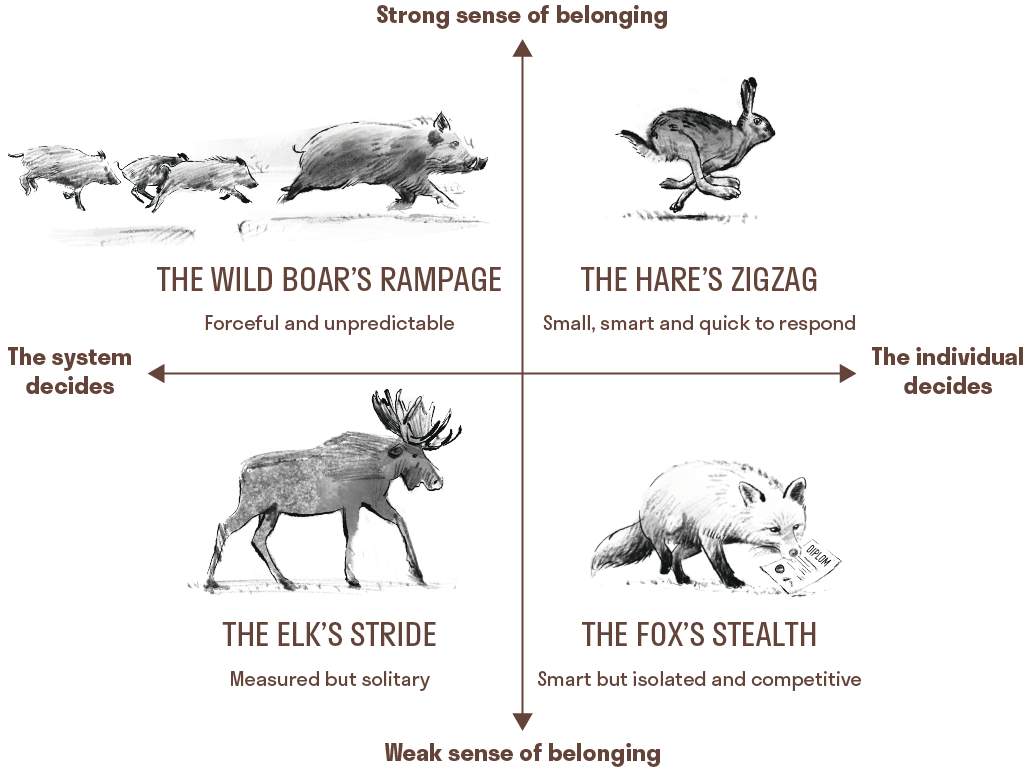
How did the two critical uncertainties emerge? Drawing on existing research, we defined the first future axis – sense of belonging – in advance, while participants in each workshop determined the second axis based on their own focus. Looking across all five workshops, the question of decision-making authority emerged as a shared second axis.
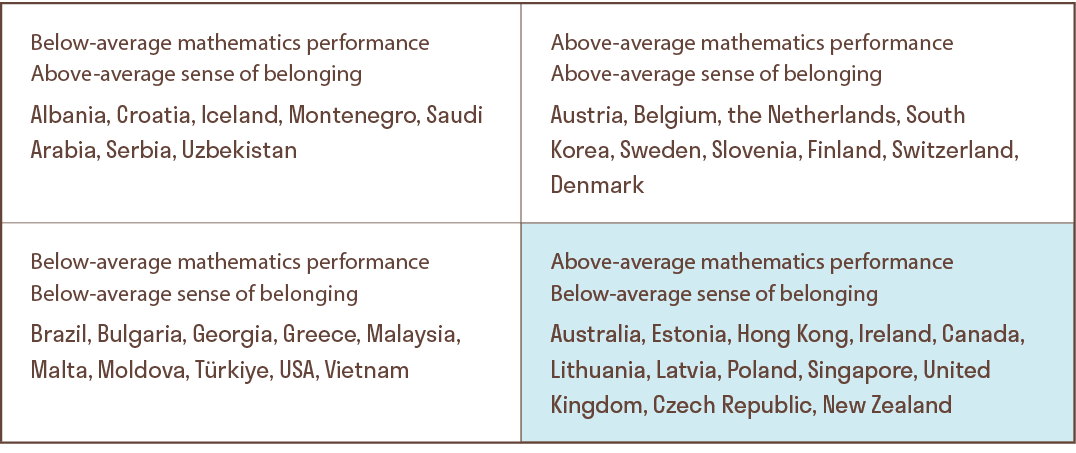
AXIS 1. SENSE OF BELONGING is the central axis of the future scenarios for education, as it determines the extent to which people – whether learners, teachers, leaders or community members – feel that they are part of the education system rather than merely its users or temporary participants. In PISA assessments, Estonia ranks among countries with strong mathematics performance but a weaker-than-average sense of belonging (Figure 8.4).45 Local futures workshops likewise noted that when schools and communities foster a strong sense of belonging and place attachment, there is no need to fear young people leaving to study or work elsewhere, as they are likely to return.
AXIS 2. SYSTEM VERSUS INDIVIDUALS This axis defines where primary decision-making authority lies in education: whether decisions are made centrally and imposed by the system (the system decides), or whether learners, teachers and communities themselves are able to guide, shape and decide education policy and practice (the individual decides). If the education system moves towards rigidly centralised governance, this may reduce motivation, innovation and a sense of responsibility at the grassroots level. Conversely, if responsibility shifts too far towards individuals, quality and equality may suffer.
How were the scenarios named? We searched for metaphors to describe different modes of movement and found them in the animal kingdom. Animals do not move through their environments at random – the ways they move have evolved out of the need to survive and adapt. In the same way, society and education systems do not move along linear or random paths, but respond to environmental change, including technological advancements and evolving social values. The future scenarios for Estonian education in 2050 use the modes of movement of different animals as metaphors to create a clearer understanding of possible development pathways – not to predict the future but to increase awareness and flexibility.
The use of animal metaphors in Estonian education was also discussed in the context of the Tiger Leap programme in 1996, during the ETV broadcast Otseliin, where President Lennart Meri remarked that the tiger leap was not particularly apt, as ‘there are no tigers in Estonia and Estonians have never leapt – they simply stride …’.47 In the same discussion, Professor Marju Lauristin suggested replacing the tiger leap with the hare’s zigzag: ‘We make a hare’s zigzag in our development […] This gives us the opportunity to draw on [nineteenth-century Estonian national thinker] Jakob Hurt’s observation: we are not great in strength, but we can be great in spirit. This means that the small and fast can be more successful than the large, slow and wealthy.’ Thus, at moments of societal and educational transformation in Estonia, animal metaphors have often provided a way to make sense of possible future paths. Drawing on Professor Lauristin’s words, the future scenarios for Estonian education in 2050 presented in this report were inspired by the idea of the ‘hare’s zigzag’ proposed in 1996.
THE WILD BOAR’S RAMPAGE
When the environment changes faster than the rules, decisions are made hastily, without due consideration but forcefully. The future of teachers and schools increasingly depends on short-term political point-scoring priorities rather than stable, well-considered development. A focus on metrics pushes well-being into the background.
A wild boar does not run without reason. It sniffs for food in the moss, listens to the silence of the forest and moves calmly with its herd. But when it senses danger or disturbance, it can instantly charge – all its strength and mass are set in motion with the aim of breaking through, regardless of what lies in the way.
The education system can behave in much the same way when too much changes at once or when there is a sense that something must be done immediately. If the environment changes faster than the rules, or if the rules cannot be updated in time, the system may begin to resemble a wild boar in a rampage: decisions are made quickly and forcefully, but not necessarily wisely. The more tense the situation, the stronger the impulse to push through. If someone gives the order, everyone runs. At times, a rampage may also follow a prolonged period of indecision, when action is finally taken simply because something has to be done.
The future of teachers and schools increasingly depends on which issues dominate the political agenda at a given time. A project-based approach brings large, campaign-like injections of funding to priority areas, but often followed by stagnation.
The wild boar does not choose whether to run or stand still – it reacts to its environment. But if the system leaves no room for reflection, adaptation or local thinking, rapid reaction can lead to profoundly negative consequences. This is why we must ask ourselves: Is education moving forward, or are we merely forcing our way through?
THE HARE’S ZIGZAG
When the environment is unfamiliar, a small country must be smart and make zigzags at the right time and in the right direction, because a zigzag can be either life-saving or catastrophic. In the hare’s zigzag scenario, Estonia turns its small size into an advantage by transforming schools into community centres that serve learners at different stages of life and making education flexible across the life course.
The hare does not run in a straight line. It stops, listens and chooses the moment to move. It advances quietly, ears alert, eyes open, ready to respond before others even notice that something has changed. It does not leap at random but makes smart zigzags.
In the hare’s zigzag scenario, Estonia’s small size becomes an asset. This is a world in which shrinking does not mean retreat. Falling birth rates, regional population decline and an ageing society do not lead to school closures but instead prompt a rethinking of the role of schools. Schools become community centres that support learning at different stages of life, bringing together children, working-age adults and pensioners. Education is no longer merely the starting point of a young person’s path but also the second and third step of adult life.
A strong sense of community that keeps schools alive can, however, also become a stumbling block – avoiding difficult or unpopular decisions, such as school closures, may lead to overspending. This, in turn, threatens teachers’ pay levels and reduces opportunities to invest in buildings, technology or other areas. Moreover, too many zigzags taken without a clear direction can ultimately leave education reactive rather than creative. And a zigzag in the wrong direction may lead straight into the wolf’s path.
Above all, making zigzags must not leave any child or learner invisible. Education does not merely transmit knowledge; it holds society together. Schools must be community shelters, not grading machines. At the heart of all this must be the individual – one that, like the hare, can respond, manoeuvre, pause and leap, doing so not at random, but with a sense of when and where it is wise to move. The hare’s zigzag does not allow us to know in advance exactly what education will look like in 2050, but it provides preparedness, flexibility and clarity to recognise the moment when a change of direction is needed.
THE FOX’S STEALTH
In the fox’s stealth scenario, education is smart and adaptive, but increasingly isolated and competitive. Only the most skilful navigators survive. A sense of belonging and safety nets are not taken for granted – everyone must find their own path and support.
The fox is neither loud nor impatient. It moves quietly, keeps to the shadows, stops, observes and listens. Its step is soft but purposeful – always ready to change direction, reassess and, if necessary, retreat. The fox has no pack; it operates alone, cleverly and discreetly, keeping its distance. It chooses opportunity over confrontation. Fox’s stealth is not about speed or bravery but about survival in a highly competitive environment.
This could also be Estonian education in 2050. Smart and adaptive, yet increasingly isolated and competitive. Population decline does not lead to school closures but to dispersion. Education shifts towards cities and centres where resources, learners and teachers concentrate. In smaller places, the system formally remains in place but in reality becomes thin and uneven in quality. Educational institutions compete for both teachers and learners, and educational inequality deepens.
Well-being and mental health also become individual responsibilities. Pupils must find support on their own, and teachers must manage their workload independently. Education relies on the strongest, as the system lacks the capacity to provide support.
A sense of belonging does not emerge by default. If education fails to create community, the vacuum is filled by those who offer simplicity – a clear identity, a black-and-white worldview and seemingly unequivocal answers. Excluded young people do not forget their experiences; adults who were denied a second chance later feel little obligation to contribute. An education system that does not connect can produce distrust, susceptibility to disinformation and radicalisation. If education does not offer a sense of belonging, it will be sought elsewhere – sometimes outside the system, sometimes in opposition to it.
Fox’s stealth does not mean collapse. It describes an environment in which those who survive are the most skilful navigators, the best adapters and the quickest responders. Education does not disappear; it changes. It no longer offers an implicit safety net but requires everyone to stand up for themselves. Cleverly, quietly, as unobtrusively as possible.
THE ELK’S STRIDE
In the elk’s stride scenario, education moves slowly and with composure along a familiar path, drawing on past success and stability. It offers a sense of security, but slow adaptation may leave the system vulnerable to unexpected change, as it discovers too late that the old path now leads directly into danger.
The elk travels long distances, with purpose and dignity. It does not run or rush, as it has few natural predators – its greatest threat is humans: the hunter lurking at a distance or a car suddenly appearing on the road. The elk does not seek contact; it does not need a herd or companions, but moves at its own rhythm, often alone. Strong and quiet, it radiates calm confidence, even a sense of immunity. Yet it is precisely in this strength that its vulnerability lies – when the environment changes unexpectedly, the elk may not realise that the familiar path now leads directly into danger.
The education system in the elk’s stride scenario in 2050 is balanced, structured and predictable. It follows a fixed path, even if this no longer aligns with the rhythms of the real world. Like the elk that trusts in its size and experience, education relies on the strength of the system and its past success rather than environmental sensitivity. When the population declines, this does not trigger bold educational innovation but an orderly and quiet contraction – schools are closed where there are too few children. Adult education is seen primarily as a labour market policy instrument rather than as a driver of human development or social cohesion.
Financial pressure places the system in austerity mode, but the direction of movement does not change. Support and services are more likely to be cut than the nature of education is to be fundamentally rethought. Teachers’ job satisfaction relies more on personal vocation than on consciously designed support. However, the system continues to move forward, assuming that teachers will remain in the field.
Technology is adopted moderately and cautiously. Information systems function and data are collected but used mainly for reporting rather than for substantive change. The potential of AI remains underutilised – not out of malice but out of caution that favours established ways of working.
Lifelong learning may be a priority on paper, but in practice a linear, youth-centred educational pathway continues to dominate. Diversification of learning formats remains incomplete – the elk keeps moving along the path it knows, even though the forest around it has changed. In places, it may no longer even exist.
The elk’s stride scenario does not lead to catastrophe, but neither does it generate renewal. It is a future in which education largely persists on the basis of its past success. The system appears too large to be seriously threatened – until the moment the elk, unnoticed, steps onto the road into oncoming traffic.
HOW DO WE MOVE FORWARD?
The future does not demand from us only knowledge and skills, but above all readiness to adapt – the ability to recognise when to accelerate, when to slow down, when to make an unexpected turn or when to maintain a steady pace. Just as in nature there is no single best way of moving, there is no single ideal future scenario for education. All four animal-based scenarios have their own strengths and risks, which depend on context. In some situations, the forceful and rapid movement of the wild boar may be needed; in others, the hare’s smart zigzags; and in yet others, the fox’s restrained strategy or the elk’s stable perseverance.
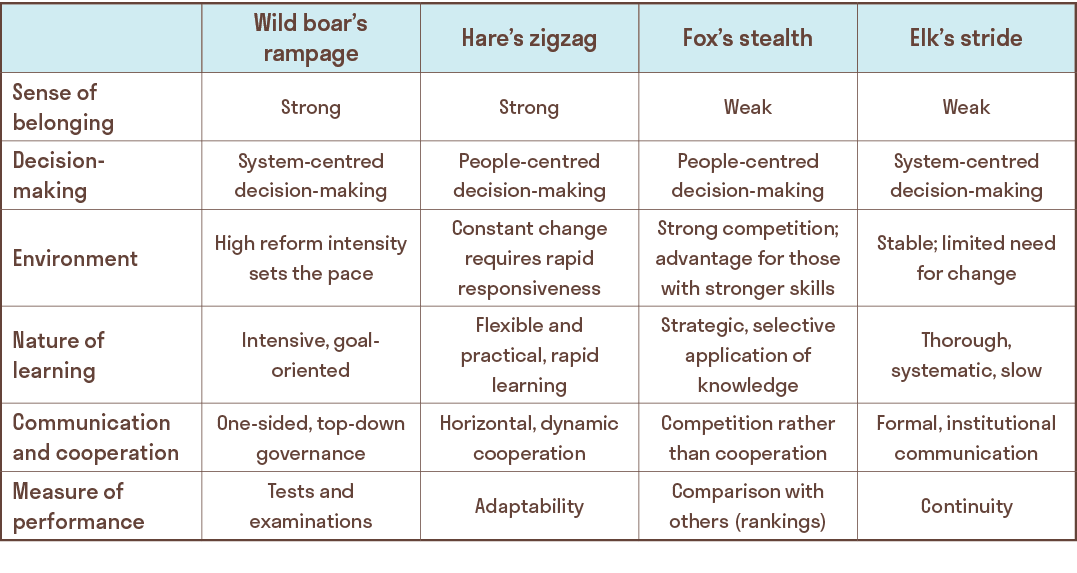
Table 8.2 summarises the main differences between the four future scenarios. What matters is not so much which scenario we currently inhabit or which one is the best but whether we are able to recognise when our existing mode of movement no longer works. At that point, the ability to distinguish patterns, assess conditions and consciously adjust our responses becomes crucial – whether at the level of the individual, the organisation or the system as a whole.
ACKNOWLEDGEMENTS
We would like to thank all participants in the futures workshops: the pupils of the Obinitsa community class of Seto School, Inger-Lill Hindreko, Meribel Allik, Uku Jõeleht, Johanna Helene Palm, Martha-Ly Lilleorg, Emma Pallase, Annely Tank, Indrek Lillemägi, Kristi Tarik, Kadi Pilv, Kaarel Rundu, Mona Mägi-Soomere, Edgar Roditšenko, Lauri Mäesepp, Kadri Kangro, Meel Valk, Kaarel Vaidla, Triin Rõõmusoks, Kerli Kõiv, Urmo Uiboleht, Katre Kikkas, Aet Kiisla, Kerda Eiert, Maris Toomel, Mare Roosileht, Indrek Kõverik, Vladimir Všivtsev, Merit Kindsigo, Kaire Kiil, Ivo Visak, Jaanika Tiitson, Gabriela Rooso, Kristi Sillart and Laura-Liisa Adlas.