Higher educational attainment reduces the risk of offending
- Higher levels of education reduce the risk of offending. Among persons referred to court, the largest proportion have primary or basic education, while those with higher education are least represented.
- The risk of offending is highest among men with low levels of education. In recent years, men have consistently committed approximately 90% of registered crimes.
- Criminal proceedings against more highly educated individuals are more often terminated on grounds of expediency. Owing to the high proportion of terminated proceedings, offenders with higher education place the least burden on the justice system.
INTRODUCTION
In examining the relationship between education and crime, several questions arise: does the nature of offending change as educational attainment increases; do individuals with different levels of education commit different types of offences; do more highly educated offenders receive more lenient treatment; and does a higher level of education among offenders entail greater costs for the justice system? The national statistics used in this article offer some indications in response to these questions. The analysis focuses on the pre-trial phase of criminal proceedings because the available data do not allow for an assessment of the extent to which an accused person’s level of education may influence sentencing outcomes.
LONGER EDUCATIONAL PATHWAYS SUPPORT LAW-ABIDING BEHAVIOUR
Most international studies have shown that higher levels of education are associated with a reduced risk of offending. Research indicates that completing upper secondary education is itself a significant factor in reducing crime.1 It has also been found that greater access to university education is associated with reductions in both property crime and violent crime,2 with longer educational trajectories particularly reducing the risk of offending among men.3 Analyses of the Estonian context suggest that, as in other countries, property crime is more strongly explained by economic and socio-demographic factors than violent crime is.4
THE RISK OF OFFENDING IS HIGHEST AMONG MEN WITH LOW LEVELS OF EDUCATION
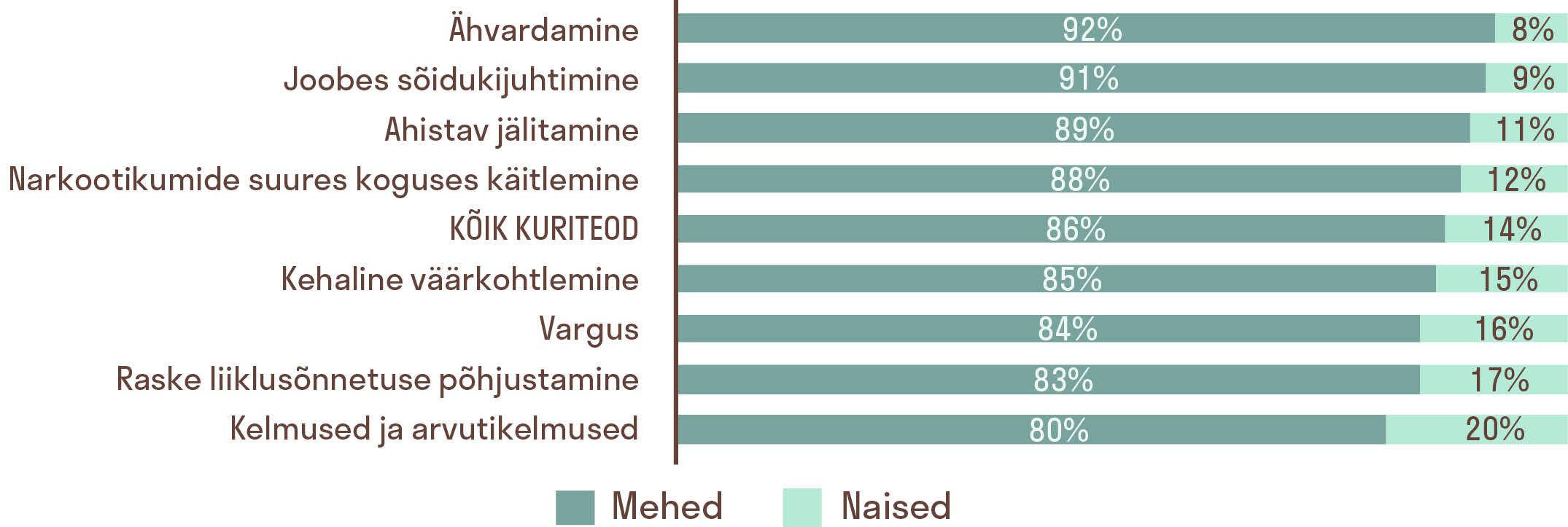
In recent years, men have consistently committed approximately 90% of registered crimes. Among the most common offence types in 2018–2023 (Figure 7.5.1), the share of men was highest in cases involving threats (92%), followed by driving while intoxicated (91%). The offence type with the highest proportion of women was fraud (20%).
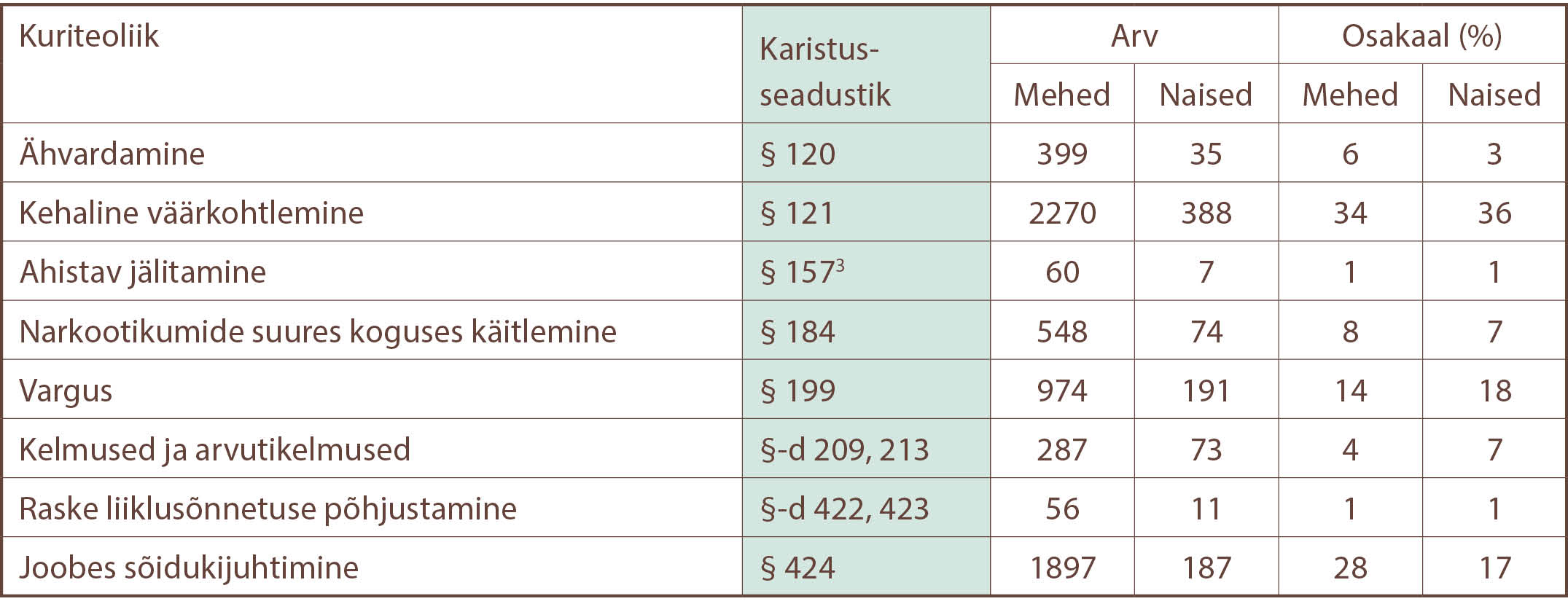
As the seriousness of offences increases, the proportion of male offenders generally rises; the average number of offences committed is also higher among men than among women. For both sexes, the largest group of suspects consisted of those suspected of bodily harm (Table 7.5.1), approximately half of whom had committed domestic violence. It should be noted that perpetrators are identified more frequently in violent crimes than in property crimes, and in traffic offences the perpetrator is almost always known.5
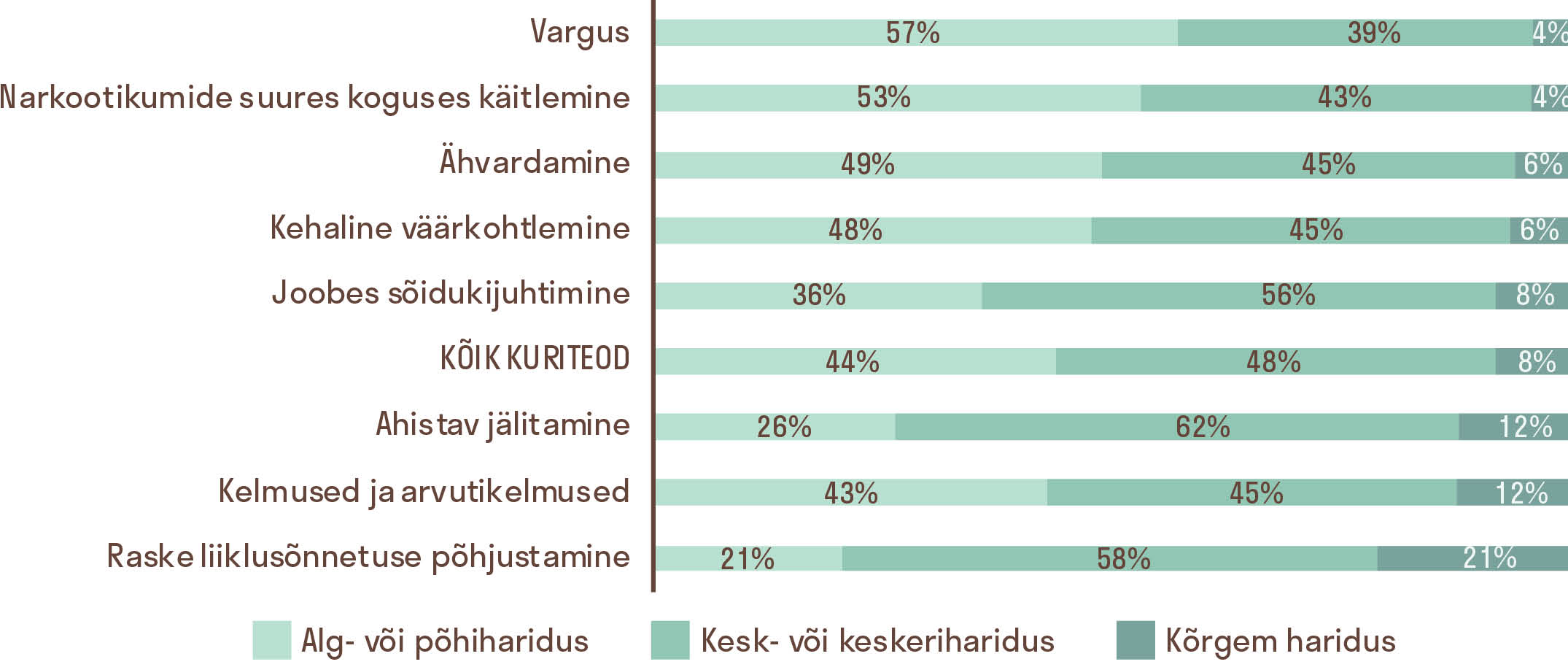
Across all types of offence combined, 44% of suspects in 2018–2023 had primary or basic education, 48% had upper secondary or vocational secondary education and 8% had higher education (Figure 7.5.2). During the same period, among residents aged 15 and over, 21% had primary or basic education, 52% had upper secondary or vocational secondary education, and 28% had higher education.6
Among the selected types of offence, suspects with primary or basic education were most prevalent in theft (57%). The highest proportion of suspects with upper secondary or vocational education was found in stalking (62%), while the highest proportion of suspects with higher education was in causing a serious traffic accident (21%).
Data and methodology. The analysis is based on data from the e-File system.7 It primarily relies on information concerning suspects and accused persons in respect of whom the prosecutor has made a final procedural decision, either referring the case to court or terminating proceedings on grounds of expediency.a This group is referred to as ‘offenders’ or ‘suspects’ and includes those accused. The analysis focuses on such cases because commission of the offence has generally been establishedb and they provide the most comprehensive data on educational attainment.
The educational level of offenders is examined for selected categories of offence:
- all registered crimes combined and crimes registered under Penal Code, Sections 120, 121, 1573, 184, 199, 209, 213, 422, 423 and 424;
- and misdemeanours which, when repeated or more serious, are classified as crimes: Penal Code Section 218, Traffic Act Section 224, and Act on Narcotic Drugs and Psychotropic Substances and Precursors Section 151.
The dataset mainly covers the period 2018–2023, and in some cases 2024. Data are presented for three groups, referred to as ‘education groups’: persons with primary or basic education; persons with upper secondary or vocational secondary education; and persons with higher education, including professional higher education.c
b In 2020–2023, 98% of natural persons whose cases were resolved in court were convicted in full or in part.
c Data on educational attainment vary in level of detail across sources, which makes it appropriate to combine smaller groups.
For the misdemeanours examined, the figures for 2023 were as follows.
- Among perpetrators of property misdemeanours (Penal Code, Section 218), 50% had primary or basic education, 46% upper secondary or vocational education and 3% higher education.
- Among perpetrators of the misdemeanour of exceeding the legal alcohol limit while driving (Traffic Act, Section 224), 33% had primary or basic education, 54% upper secondary or vocational education, and 13% higher education.
- Among perpetrators of drug-related misdemeanours (Act on Narcotic Drugs and Psychotropic Substances, Section 151), 71% had primary or basic education, 27% upper secondary or vocational education, and 2% higher education.
There is no consistent long-term time series on offenders’ educational attainment. Data on defendants referred to court in 20018 suggest that the overall picture was broadly similar to that observed today.
- In property crimes, approximately 60% of accused persons had primary or basic education, 40% had upper secondary education, and around 1% had higher education.
- In offences against the person, 43% of accused persons had primary or basic education, 54% upper secondary education, and 3% higher education.
- In traffic offences, around 30% of accused persons had primary or basic education, while approximately 70% had upper secondary or higher education.
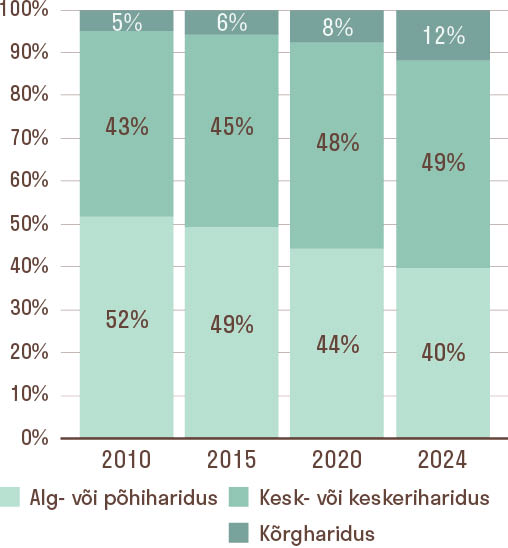
In recent years, the proportion of suspects with primary or basic education has declined, while the share of other education groups has increased. Between 2015 and 2024, the proportion of suspects aged 15 and over with higher education rose to 16%,11 and their share among suspects doubled during the same period (Figure 7.5.3).
The increase in the proportion of suspects with higher education is primarily related to driving while intoxicated, where the number of higher-educated suspects has risen year by year. Although their share has also increased in some other offence categories, including domestic violence, fraud, embezzlement, offences against public trust and economic crime, this is largely due to a decline in the number of suspects with lower levels of education; there is no clear upward trend in the absolute number of suspects with higher education.
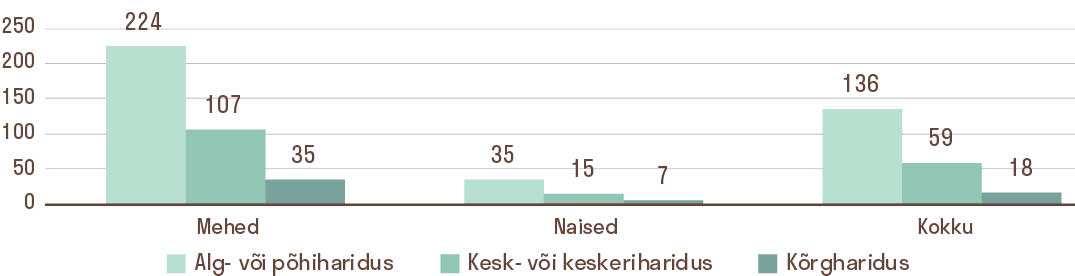
In 2018–2023, there were on average 136 suspects per year for every 10,000 residents with primary or basic education, the highest rate among the education groups. This was more than twice the corresponding figure for persons with upper secondary or vocational education (59) and nearly eight times the figure for persons with higher education (18) (Figure 7.5.4). The population base included residents aged 15 and over with known educational attainment.12
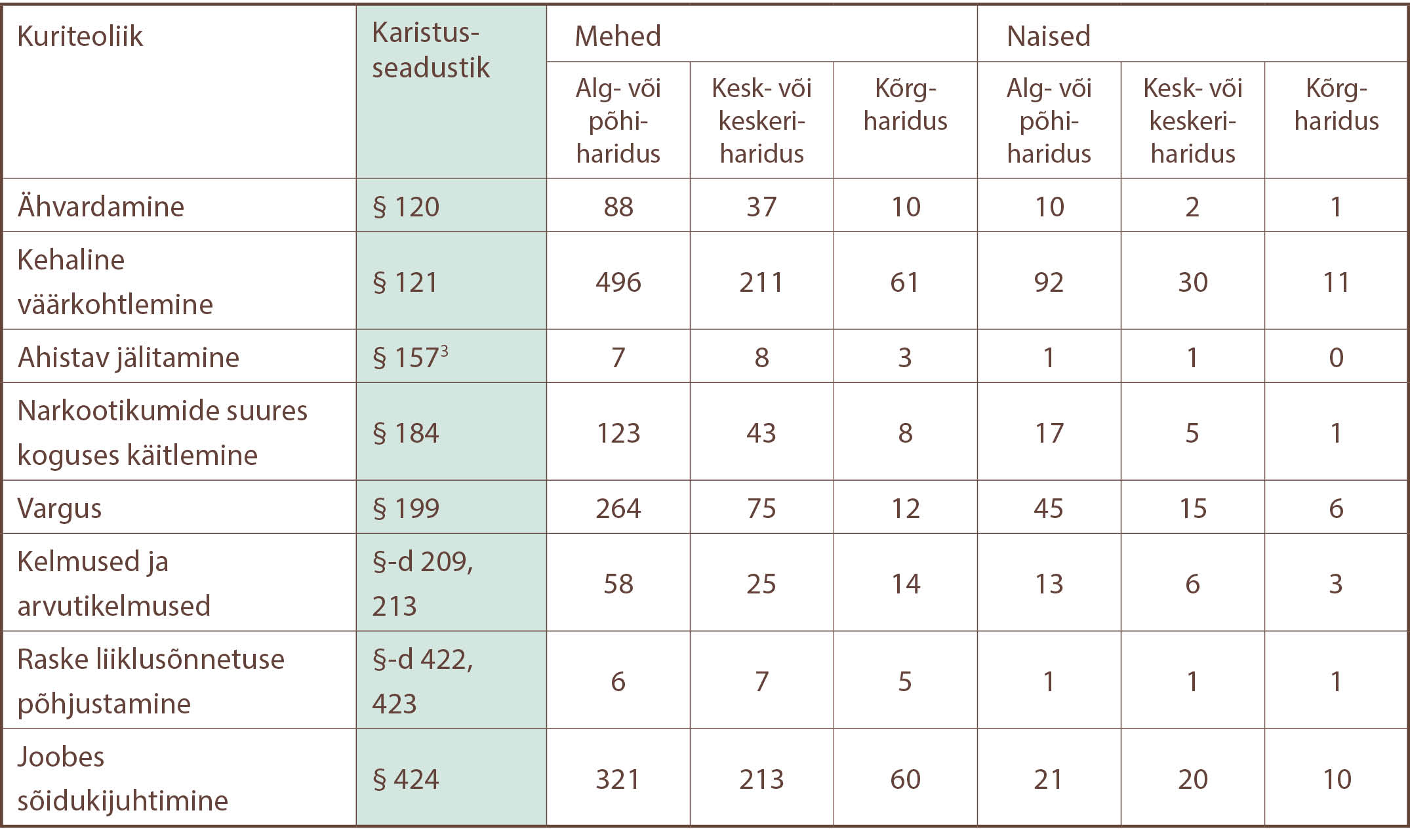
When the number of suspects per 10,000 persons is considered, differences between education groups were most pronounced in theft and drug offences (Table 7.5.2).
In offences against the person, the data may not fully reflect actual differences between education groups, as the perpetrator is often the victim’s partner or another family member. In such cases, reporting may be avoided in the hope of resolving the matter privately or out of fear of retaliation.
Electronic channels are playing an increasingly significant role in crime, which makes it difficult to group offenders clearly by offence type or other characteristics. The same individuals may commit both ‘traditional’ theft and online fraud, and may use parcel lockers and GPS devices in drug offences. Substance misuse substantially increases the risk of offending14 and occurs across all education groups: in 2023, 8% of respondents with primary or secondary education and 4% of those with higher education reported heavy alcohol consumption.15 This is particularly relevant in violent crime, most of which is committed while intoxicated, shoplifting, where a large share of offenders have substance dependence, and driving while intoxicated, which is largely linked to excessive alcohol consumption.19 Domestic violence occurs across all population groups, although the risk of physical violence decreases as education level increases.
Among women with higher education, the share of suspects in drink-driving offences has increased more rapidly than among men, although men continue to dominate this type of crime. In 2015, women with higher education accounted for 0.8% of all suspects in drink-driving offences; by 2024, the figure had risen to 3.3%, representing an approximately fourfold increase. Among men with higher education, the corresponding figures were 4.5% and 8.6%, representing an approximately twofold increase. This may reflect a trend observed in surveys:16 in 2014, 10.6% of women with higher education consumed alcohol at least two to three times a week, compared with 16.5% in 2022. Among men with higher education, the share of frequent alcohol consumers did not increase over the same period.
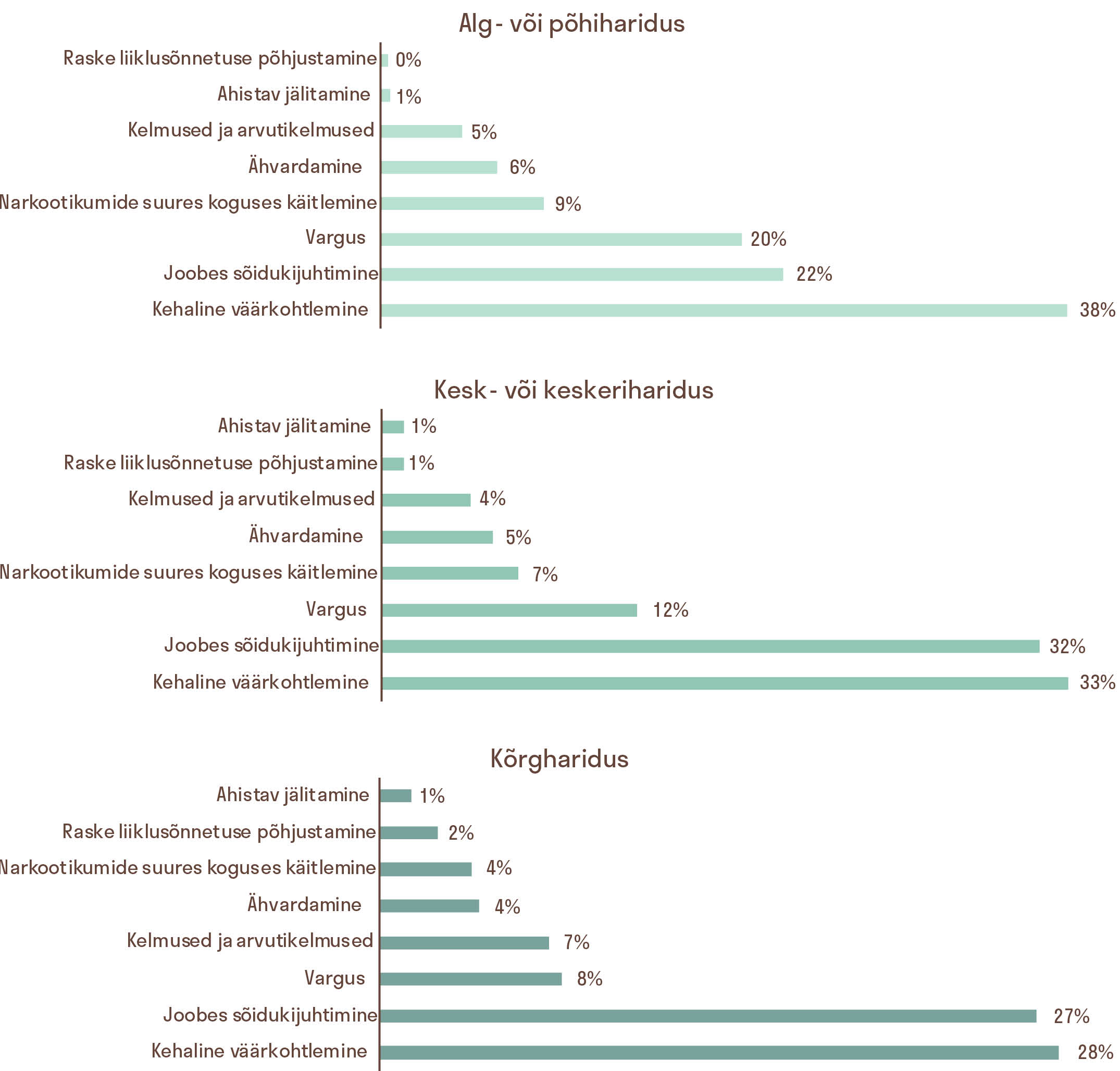
For the offence types examined, bodily harm accounted for the largest number of suspects in all education groups in 2018–2023, followed by drink-driving and theft (Figure 7.5.5). The higher the suspects’ level of education, the lower the share suspected of theft, drug offences or threats. Suspects in fraud or computer fraud, causing a serious traffic accident and stalking were most prevalent in the higher education group.
HIGHER EDUCATIONAL ATTAINMENT MAKES REFERRAL TO COURT LESS LIKELY
At the conclusion of the pre-trial investigation, the prosecutor decides whether to refer the criminal case to court or terminate the proceedings on grounds of expediency, provided that the suspect agrees to assume time-bound obligations (Code of Criminal Procedure, Sections 201–203). Even where proceedings are terminated, the prosecutor is satisfied that the offence was committed. Proceedings are most commonly terminated because there is no public interest in continuing them and the degree of guilt is not significant (Code of Criminal Procedure, Section 202): in 2024, this accounted for 78% of all cases terminated on grounds of expediency. Cases involving juvenile offenders accounted for 13% of terminations (Code of Criminal Procedure, Section 201), while 5% were terminated because punishment was deemed disproportionate (Code of Criminal Procedure, Section 203) and 4% because the damage caused by the offence had been remedied (Code of Criminal Procedure, Section 203¹).
Among persons with higher education, the risk of domestic violence offences is lowest.
In domestic violence offences (Penal Code, Section 121(2)(2)), the average annual number of suspects per 10,000 residents in 2018–2023 was 22 among persons with primary or basic education, 12 among those with upper secondary or vocational education, and three among those with higher education.
According to survey data, differences between education groups among victims have been considerably smaller.
- In a 2009 survey, 14% of respondents with primary or basic education, 10% with upper secondary or vocational education, and 8% with higher education reported having experienced intimate partner violence in the previous 12 months; for physical violence, the corresponding figures were 8%, 5% and 3%.21
- In a 2022 survey, 33.7% of women with primary or basic education, 27.1% with upper secondary or vocational education, and 22.1% with higher education reported having experienced domestic violence in adulthood; the corresponding figures for men were 18.0%, 15.3% and 15.9%.22
As a hidden and sensitive offence category, domestic violence data may be influenced by factors that complicate comparisons between education groups, such as awareness of what constitutes domestic violence, perceptions of severity, willingness to initiate formal proceedings and financial dependence on the perpetrator. In survey data, the severity and total number of incidents are also unknown, including whether reported cases were preceded by unreported incidents and whether this varies across education groups.
Suspects of stalking were several times fewer in number, with rates below one per 10,000 residents. Among persons with higher education, the proportion was approximately three times lower than in the other education groups. While differences between groups are observable, they are markedly smaller than in domestic violence offences.
In domestic violence cases, procedural practice has generally followed the pattern seen in other offence categories: where the perpetrator has higher education, proceedings are more often terminated on grounds of expediency, including in repeat cases, whereas perpetrators with primary or basic education are more frequently referred to court.a
The prospects for terminating proceedings are more favourable for suspects who are economically and psychologically stable; these factors are, to a considerable extent, associated with the level of education. For example, the prosecutor may consider that imposing obligations is sufficient to influence a more highly educated suspect. Similarly, a person with higher education may have greater financial or time resources to compensate damage, fulfil obligations or perform community service. Decisions may also be significantly influenced by repeat offending, which, depending on the offence type, may preclude termination, compliance with previously imposed obligations, prior convictions, the suspect’s attitude towards the offence and its consequences, and their willingness to fulfil obligations within the prescribed time limit.
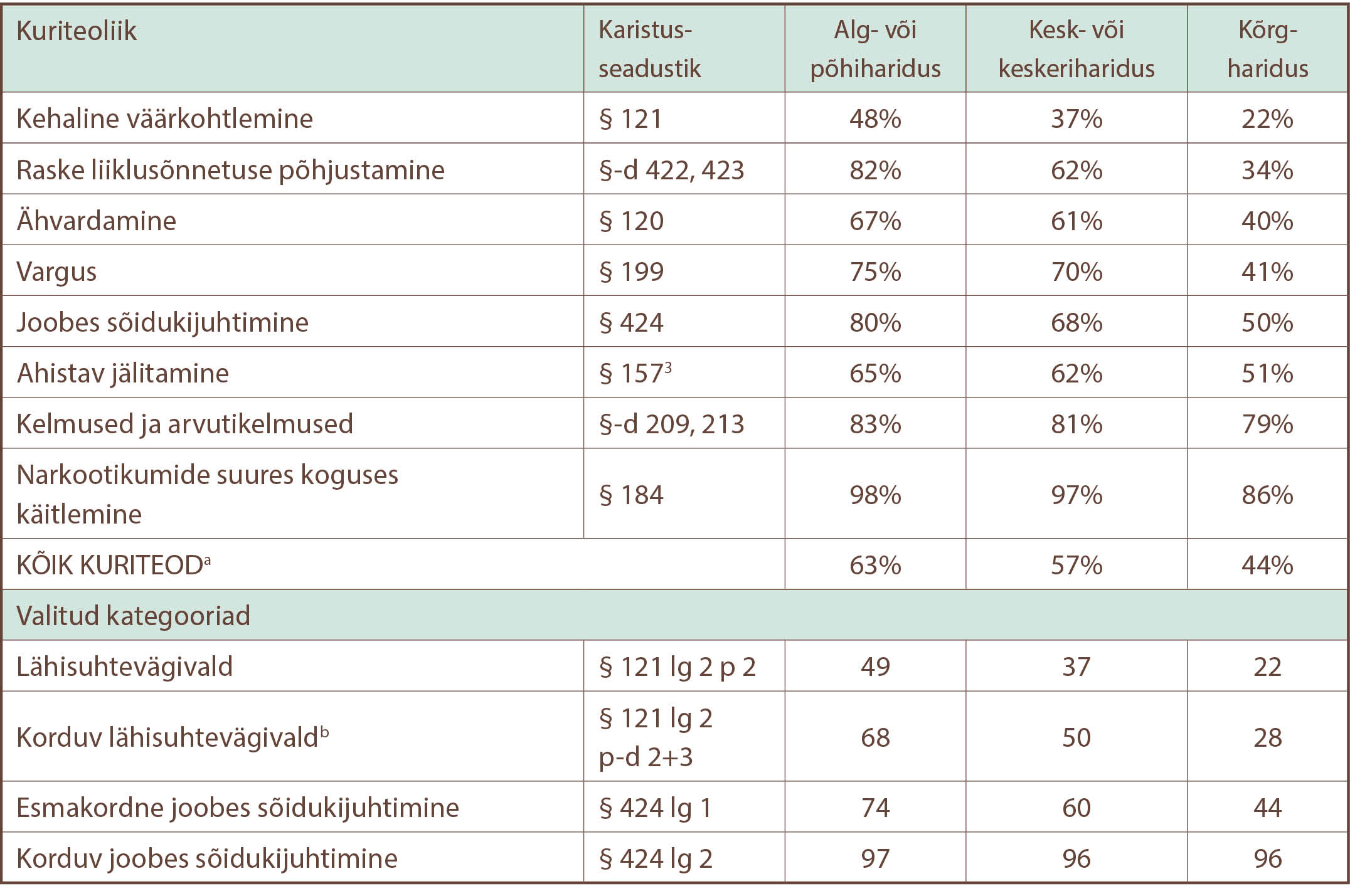
The proportion of persons referred to court has been highest among those with primary or basic education and lowest among those with higher education (Table 7.5.3). Differences between offenders with primary or basic education and those with higher education are relatively pronounced in violent crime, theft and traffic offences, but smaller in fraud, computer fraud and drug offences. An exception is repeat driving while intoxicated (Penal Code, Section 424(2)), where prosecutors generally do not terminate proceedings on grounds of expediency.
In property and traffic offences, the possibility of compensating the victim for damage is an important factor influencing procedural decisions. Violent offences encompass a wide range of conduct, and there may be differences between education groups in the average severity of offences. The degree of severity is one of the factors taken into account when deciding whether to terminate proceedings or refer a case to court.
THE COST OF COURT PROCEEDINGS DEPENDS PRIMARILY ON PROCEDURE TYPE, NOT EDUCATION LEVEL
In 2022–2024, 72% of criminal cases referred to court were adjudicated in settlement proceedings, 15% under general procedure, 12% under alternative proceedings and less than 1% under summary proceedings. This distribution was similar across all education groups. Information on defendants’ education was unavailable in 29% of cases. Given the predominance of common offences such as bodily harm and driving while intoxicated in court cases, it is unlikely that the average procedural cost per defendant differs significantly between education groups overall. In certain offence categories, such as corruption, cases may be more complex than average and a relatively large proportion of defendants may have higher education; however, the number of such cases is small.
SUMMARY
As educational attainment increases, the overall risk of offending decreases. Offenders have consistently been disproportionately represented among people with low levels of education, while relatively few have had higher education; the differences are most pronounced in theft. Violence occurs across all population groups, but the share of direct physical assaults declines as education level rises. In certain less frequent offences requiring specific expertise, such as corruption and economic crime, the risk of offending may increase with higher education.
The risk of offending is highest among men with low levels of education, particularly in violent offences, including domestic violence, and theft. The risk of becoming a victim of domestic violence is also highest among persons with lower educational attainment, and perpetrators with higher education are less likely to be referred to court than those with lower education.
Irrespective of the type of offence, the likelihood of termination of proceedings on grounds of expediency increases with the suspect’s level of education. Compared with suspects with lower educational attainment, those with higher education are generally better placed to fulfil the time-bound obligations required for termination; they are also more likely to have no prior convictions.
Because criminal proceedings involving offenders with higher education are more often terminated before reaching court, these offenders place the least burden on the justice system. Regardless of the offender’s level of education, termination of proceedings may be appropriate, particularly in the case of first-time offenders, without increasing the risk of reoffending. In recent years, for example, repeat offending among first-time offenders apprehended for driving while intoxicated has declined significantly where proceedings were terminated because there was no public interest in continuing them and obligations were imposed.