Patterns and causes of juvenile offending: School, family and the digital environment
- One in five young people in Estonia has committed an offence. The most common offences are shoplifting and sending hurtful messages on social media.
- One in five young people in Estonia has experienced cyberviolence. On social media, this includes threats, hate messages and the non-consensual sharing of intimate images.
- Young people who perceive their school environment as disorganised and violent are at greater risk of offending. Positive, strong bonds with school reduce the risk of deviant behaviour.
- A supportive family that monitors a child’s behaviour reduces the child’s risk of offending, while direct or indirect exposure to violence in the family increases the risk of deviant behaviour.
INTRODUCTION
One of the most consistently confirmed patterns in criminology is the relationship between age and crime: the proportion of young people who commit offences rises sharply in early adolescence, peaks in late adolescence or early adulthood, and then declines markedly with age. The traditional view regarded this age curve as a universal phenomenon,1 arguing that the age distribution of offending is broadly similar regardless of historical period or cultural context. Subsequent studies, however, have shown that the peak of offending may vary by offence type2 and culture.3 Most individuals who offend during adolescence desist in adulthood, but a small proportion continue throughout their lives, becoming chronic offenders.4 In analysing the impact of environmental factors on juvenile deviant behaviour, this article draws on the risk and protective factors approach.5 Risk factors may stem from the young person’s own personality traits as well as from the family, peer group and school environment. In this article, we focus on two central environments in a child’s life: the family and the school.
ONE IN FIVE YOUNG PEOPLE IN ESTONIA HAS COMMITTED AN OFFENCE
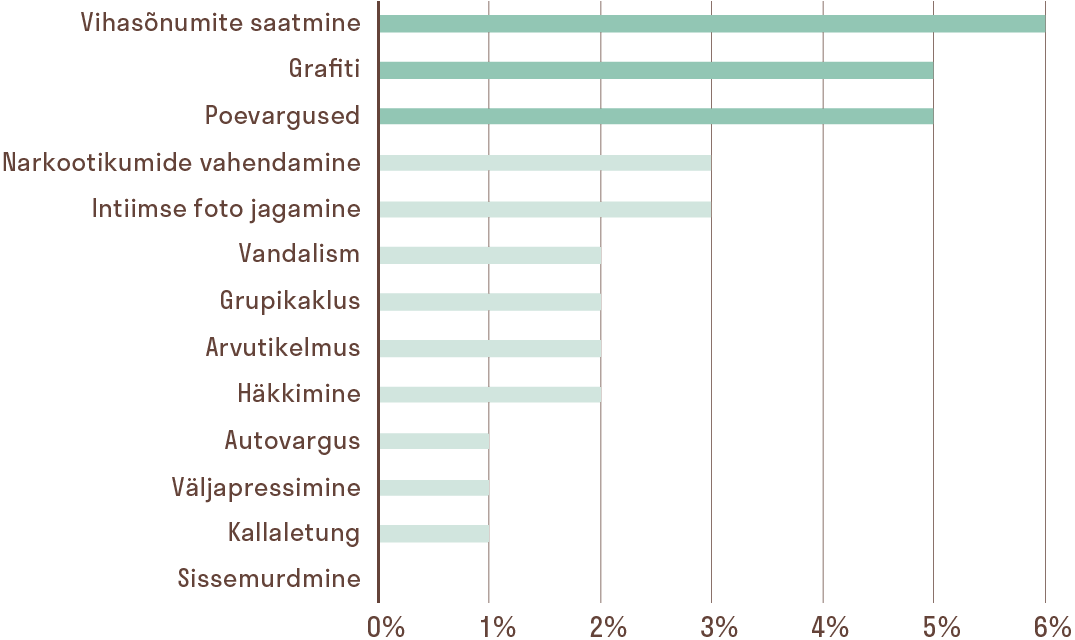
This article is based on an analysis of data from the International Self-Report Delinquency Study (ISRD4),6 conducted in Estonia in spring 2023. We begin by examining how frequently pupils in grades 8–11 commit offences. Figure 7.2.1 presents the proportion of young people who, according to the survey, committed at least one offence during the preceding 12 months.
One fifth of the surveyed young people reported having committed at least one of the listed acts in the past 12 months. Excluding weapon carrying, the most common offences were shoplifting from a shop or store (5%), painting graffiti (5%), and sending hurtful messages or comments on social media about someone’s race, ethnicity, nationality, religion, gender identity or sexual orientation (6%, also referred to as online hate speech). More serious offences, such as burglary with intent to steal, theft of a motorcycle or car and extortion, were rare – fewer than 1% of respondents admitted to having committed such acts.
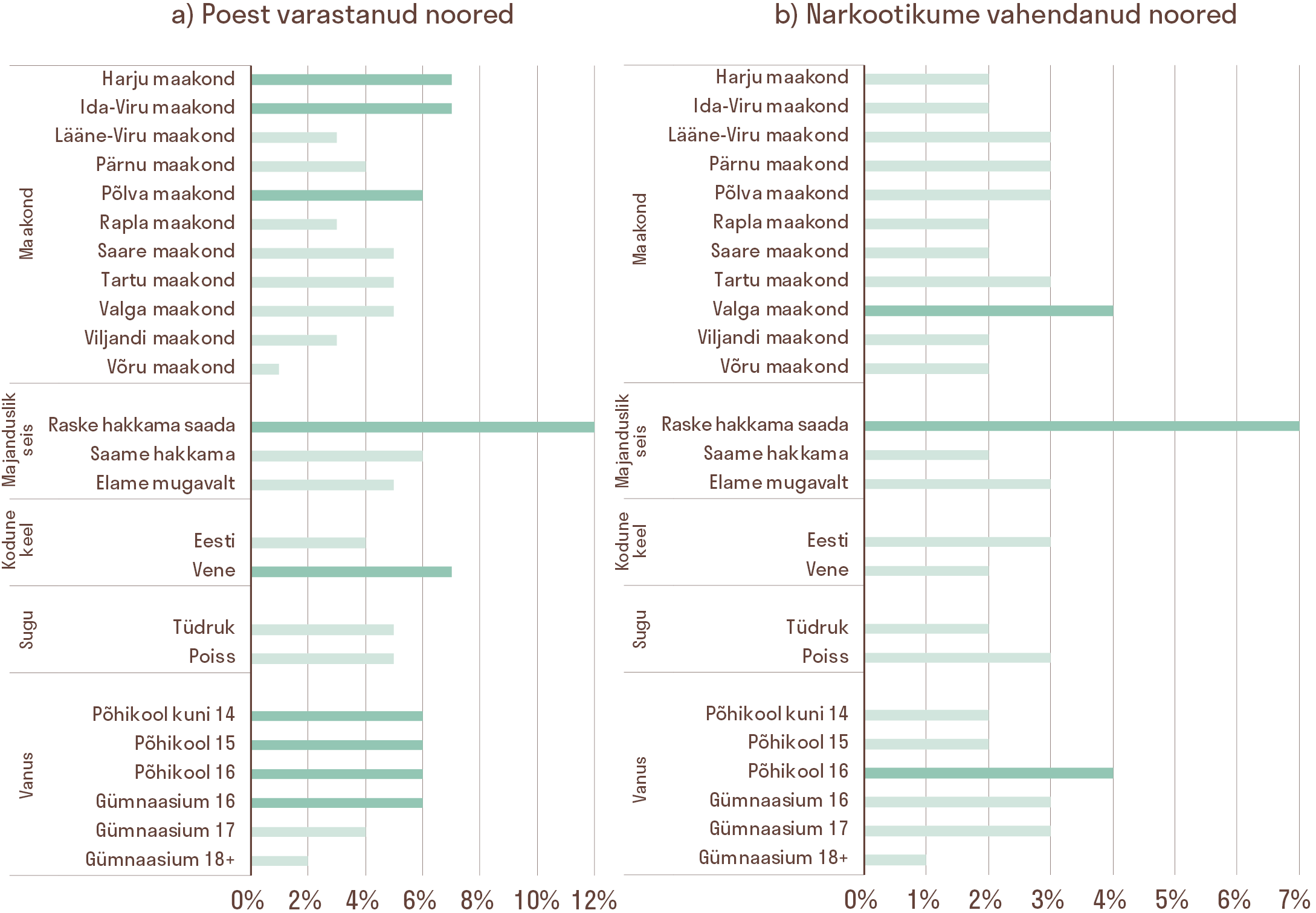
We now examine more closely traditional offences such as shoplifting (Figure 7.2.2a) and drug selling (Figure 7.2.2b). Shoplifting is most prevalent in Harju and Ida-Viru counties (7%), while the proportion of perpetrators is lowest in Võru county (1%) and in Lääne-Viru, Viljandi and Rapla counties (3%). The data do not allow a full explanation of these inter-county differences. They may reflect a combination of factors: leisure patterns, the popularity of youth centres and the availability of extracurricular education, both in terms of provision and affordability. Where young people lack opportunities to participate in structured activities outside school and shopping centres become the main venue for spending free time, the risk of shoplifting increases.8 Self-reported involvement in drug selling is more evenly distributed across counties, varying between 2% and 4%.
The data indicate that both shoplifting and drug-related offences are significantly more common among young people whose families experience economic hardship. This may be explained by the instrumental nature of these offences: shoplifting may be a means of obtaining goods that cannot be afforded legally, and drug selling may serve as a way of earning pocket money.9 Economic hardship is also associated with other risk factors for offending: family stress,10 which may result in poorer family relationships and weaker supervision of the child’s activities, limited opportunities to participate in extracurricular education11 and a higher likelihood of becoming a victim of bullying.12
An analysis of shoplifting by age shows that among 14–16-year-olds,a around 6% reported having shoplifted in the past year. This proportion declines thereafter, falling to 4% among 17-year-old pupils in upper secondary school and 2% among adult pupils in upper secondary school. Among 16-year-olds, there appears to be no difference between those studying in basic school and those in upper secondary school, although it is noteworthy that shoplifting is likely to begin before the age of 14. Drug distribution follows a different pattern: the proportion of young people who have mediated drugs increases with age and peaks among 16-year-old basic school pupils. At the same time, the proportion is lower among 16-year-old pupils in upper secondary school, which may suggest that drug selling is more common among young people who do not proceed to upper secondary education. In later adolescence, drug selling begins to decline again.
A comparison of offending rates between boys and girls reveals an interesting pattern: for all offences studied, offending in the past 12 months is more common among boys than among girls. There is one exception: in the case of shoplifting, there is no statistically significant difference between girls and boys, although the proportion is slightly higher among girls. This was not the case in 2006, when the ISRD study was first conducted in Estonia and property offences were more common among boys than girls.13 According to ISRD3 data from 2013, the difference between boys and girls was no longer statistically significant, although the percentage of girls reporting shoplifting was somewhat lower.14
ONE IN FIVE YOUNG PEOPLE IN ESTONIA HAS EXPERIENCED CYBERVIOLENCE
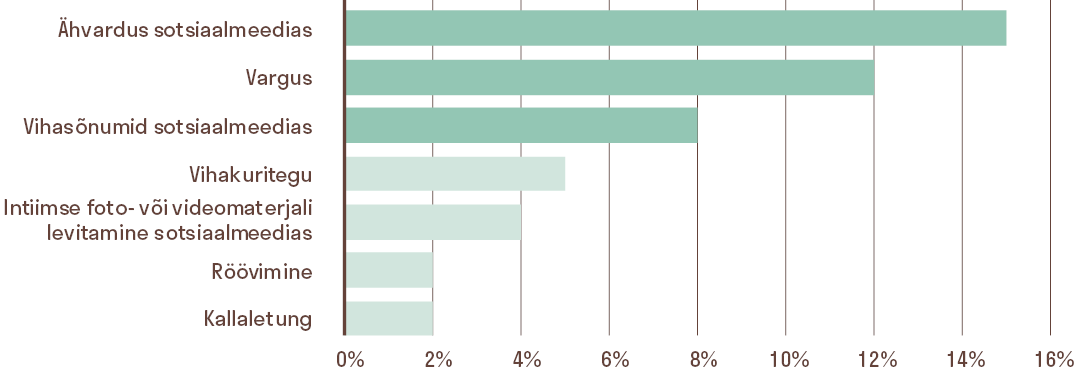
In the 12 months preceding the survey, 19% of children had been victims of offences on social media. The most common experiences were threats (15%), hate messages (8%) and the non-consensual sharing of intimate photos or videos (4%) (Figure 7.2.3). One of the most common acts, reported by 6% of young people as having been committed in the preceding 12 months, was sending hurtful messages about someone’s race, ethnicity, nationality, religion, gender identity, sexual orientation or similar characteristic. Eight per cent of respondents reported having received hate messages through social media. Basic school pupils were at the highest risk of encountering hate on social media, both as victims and as perpetrators. Gender also played a role: boys were more often perpetrators, while girls were more often victims. Russian-speaking young people faced a higher risk of victimisation. A family’s economic position affected whether a young person became a victim, but not whether they committed such acts.
Young people most frequently received hurtful messages about their appearance (44% of those who had received such messages), followed by comments concerning sexual orientation (13%) and family economic position (9%). Among respondents, 3% admitted having shared someone’s intimate photo on social media without that person’s consent, while 4% had themselves been victims of such an act. In 12% of cases involving the sharing of images or videos, the perpetrator was a current or former boyfriend or girlfriend. In most cases (89%), intimate images were circulated in closed group chats. Only 4% of such incidents were reported to the police. The sharing of intimate images was more common among basic school pupils, most often boys from Estonian-speaking families with relatively weaker economic positions. The typical victim was an Estonian-speaking girl in basic school, with family affluence not being a decisive factor. Only a small fraction of online offences reached the police: 4% of threats, 5% of cases involving the sharing of intimate images and 3% of hate messages were reported to the police by young people or their parents.
HOW STRONG AND POSITIVE ARE YOUNG PEOPLE’S BONDS WITH SCHOOL?
The school environment and a child’s relationship with school play an important role in development and behaviour. According to social bond theory, strong attachment to school significantly reduces the likelihood of risk behaviour. Research has confirmed a link between a disorganised school environment and risk behaviour or vulnerability.
Deviant behaviour among young people disrupts the learning process, and failure at school is a well-established risk factor for offending.17 Children displaying deviant behaviour often experience school failure in the form of low academic achievement, dropout and low social status. Although a direct causal link between academic performance and offending is not entirely clear, poor academic results influence behaviour, and early behavioural problems may lead to weaker academic outcomes. Maguin and Loeber18 emphasise the relationship between academic success and deviant behaviour: better academic performance reduces offending, while poor results increase it. Academic failure and offending may reinforce one another in a vicious circle.
School does not merely transmit knowledge but also socialises pupils, helping young people acquire societal values, norms and patterns of behaviour.19 Schools discipline pupils by reinforcing behavioural norms that help prevent deviant conduct. They also function as instruments of social control, reducing the risks of crime and antisocial behaviour20 through both formal and informal mechanisms. Informal control includes bonds with teachers, coaches and peers, while formal control refers to the existence, clarity and enforcement of disciplinary rules at school, including the detection of and response to breaches.
When school as an institution is weak, it does not support the formation of social bonds that encourage law-abiding behaviour.
Risk factors for criminal behaviour operate cumulatively – the more risk factors are present in a young person’s life, the greater the likelihood of antisocial or criminal development. Studies show that the total number of risk factors is often more important than their specific nature. Risk factors at different levels and in different domains, such as family, school and peers, increase the probability of antisocial behaviour, and when combined their impact becomes considerably stronger. A cumulative effect is also evident in relation to protective factors – the more protective factors present, the lower the likelihood of antisocial behaviour. Research indicates that the combined effect of protective factors may be more important than any single factor alone.21 Supportive school leadership, committed and cooperative staff, consistent behaviour management and effective teaching have been found to help reduce the risk of youth offending.22
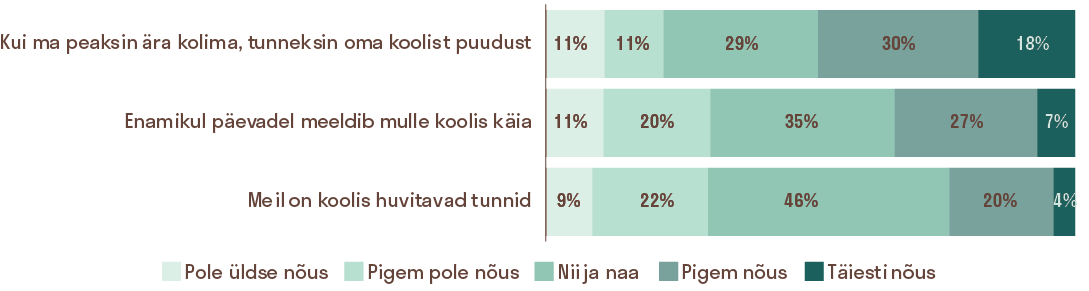
In the ISRD4 study, children were asked whether they like attending school, whether lessons are interesting and whether they would miss their school if they had to move away (Figure 7.2.4). Approximately one third of young people consider lessons uninteresting, while one quarter find them interesting. Over one third report that they enjoy going to school, and a similar proportion hold the opposite view. The ISRD4 results show that nearly half of children would miss their current school if they had to change schools. This underscores the importance of social bonds formed at school: friendships and supportive relationships increase pupils’ interest in school and improve their well-being. At the same time, particular attention should be given to schools where such a cohesive social foundation has not yet developed.
Pupils in upper secondary school report significantly stronger attachment to school than basic school pupils. This reflects both age differences and variations in the organisation of studies, as well as the fact that pupils in upper secondary school are more oriented towards continuing their education. Weak attachment to school is reported mainly by basic school pupils, particularly those from Russian-speaking and economically disadvantaged families. In contrast, young people from Estonian-speaking families with stronger economic support report a much stronger sense of belonging. When school as an institution does not reinforce law-abiding behaviour, it may be described as socially disorganised. This means that social bonds between pupils, teachers and school leadership are weak, rules are enforced inconsistently and support for pupils is limited. A lack of structure and support may weaken social control within the school and foster deviant behaviour.23
Research has identified links between school disorganisation and high turnover among pupils and staff, inconsistent disciplinary policies, insufficient resources and weak leadership.26
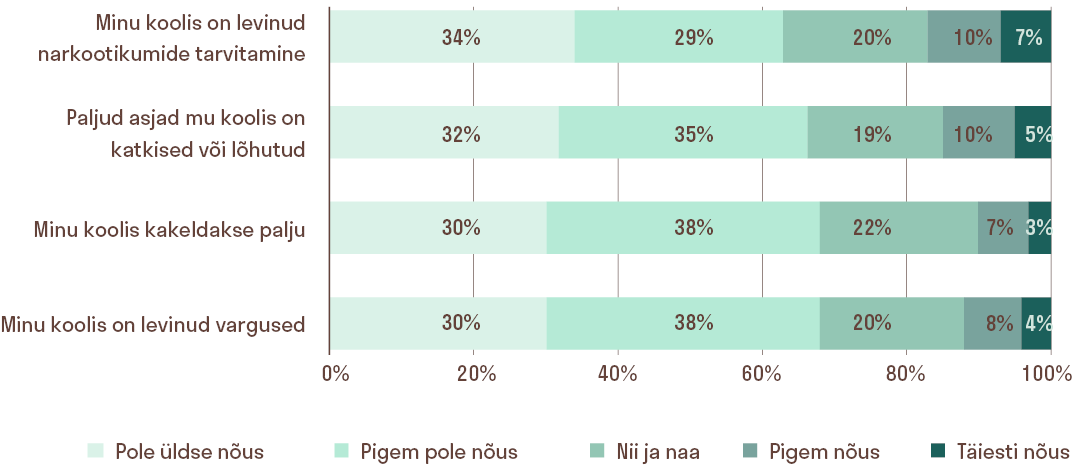
To characterise the physical school environment, the ISRD4 survey asked young people whether there were visible signs of disorganisation, such as many things being broken or vandalised. They were also asked about the prevalence of offences at their school, including theft, fights and drug use (Figure 7.2.5). Some 10% agreed that many things at their school were broken, 10% believed that there were frequent fights, 12% agreed that theft was common and 17% considered drug use to be prevalent. Pupils in upper secondary school were almost five times more likely than basic school pupils to perceive their school as well organised. Pupils from Russian-speaking families reported a stronger perception of school organisation than Estonian-speaking pupils.
The ISRD4 survey clearly demonstrates the importance of school environment quality and school-related relationships for young people. Those with stronger bonds to their school are nearly one third less likely to commit offences compared with those with the weakest school attachment. A disorganised school significantly increases the risk of offending. Young people attending the least organised schools commit offences 2.7 times more often than those in the most organised school environments. These findings highlight the need to pay greater attention to the quality of school life, as young people feel safer and are less prone to problem behaviour in well-organised and supportive schools.
HOW DO CHILDREN FEEL AT HOME?
The survey asked children to assess how well they get along with their parents, how often their parents provide emotional support and care, and whether they would feel very bad if they disappointed their parents. The analysis showed that boys experience a stronger bond with their parents than girls. Bonds are stronger in Estonian-speaking families than in Russian-speaking families. Family economic position is also an important factor in the development of strong bonds. Compared with families experiencing economic hardship, economically comfortable families are four times more likely to have strong family bonds, and families managing financially are twice as likely.
In terms of family composition, the strongest bonds with parents are formed in nuclear families where the child lives with two parents. Children in shared residence arrangements, living alternately with their mother and father, are less likely to develop strong bonds. The likelihood of strong attachment is also lower in single-parent families. In other family arrangements, such as living with relatives or grandparents, the probability of strong bonds is almost five times lower than among children living with two parents.
Parental monitoring plays an important role in shaping a child’s behaviour. According to Hirschi and Gottfredson, parental control of behaviour is central to the development of self-control.27 Stronger control refers to situations in which parents are well aware of their child’s activities, monitor how they spend their time, and set clear boundaries and rules. The survey asked to what extent a parent or other adult at home knows where the child is, what they are doing and whom they are with when they go out, and whether adults know what the child does online.
Girls experience significantly stronger parental monitoring than boys. Boys are about half as likely to experience strong control. Children in Estonian-speaking families report stronger parental monitoring, while those in Russian-speaking families report weaker control. This may partly reflect cultural differences in parenting styles or in the level of rules and supervision within families. Parental monitoring is stronger in economically better-off families. Compared with families experiencing economic hardship, families living comfortably on their current income are almost twice as likely, and families managing financially about one and a half times as likely, to monitor their child’s activities closely. In terms of family structure, the strongest monitoring is observed in nuclear families, where the child lives with two parents. In shared residence arrangements, where the child lives alternately with their mother and father, the likelihood of strong control is about half as high. Weaker control is also more common in single-parent families and other family arrangements, such as living with relatives or in residential care.
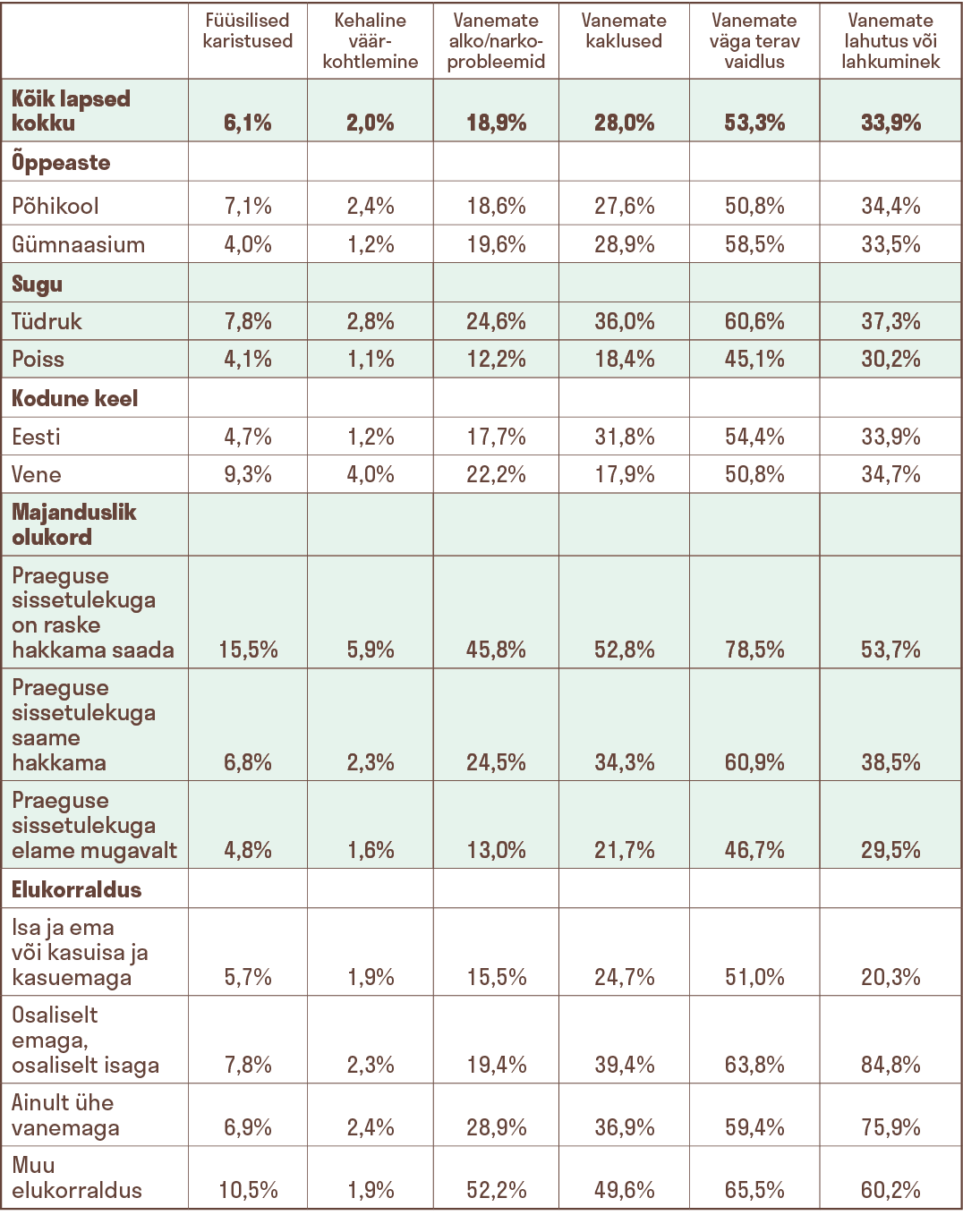
Children’s behaviour and well-being may also be affected by difficult family relationships, including situations in which a child experiences psychological or physical violence within the family, either as a witness or as a victim, and situations involving parental substance abuse. Table 7.2.1 presents the proportion of children exposed to family-related problems by socio-demographic characteristics.
Parental attempts to control or direct a child’s behaviour may sometimes cross boundaries, leading to the use of physical punishment. In the survey, physical punishment refers to situations in which a parent hits or pushes a child, even if this is presented as punishment for wrongdoing. Some 6% of children reported experiencing physical punishment in the 12 months preceding the survey. The analysis indicates that the child most at risk of experiencing parental physical punishment has the following characteristics: basic school age, female, from a Russian-speaking family and living in economic hardship. According to the data, pupils in upper secondary school were almost 50% less likely to experience parental physical punishment than basic school pupils. Boys were about half as likely as girls to be victims, and young people from Russian-speaking families faced almost twice the risk of those from Estonian-speaking families. The likelihood of experiencing physical punishment was highest among children from economically disadvantaged families. The more affluent the family, the lower the risk of physical punishment. Children from families living comfortably on their current income were about 70% less likely to experience physical punishment.
The survey also asked about parental physical abuse, defined as situations in which a parent severely beats the child or hits them with an object, including as punishment. In total, 2% of children had experienced parental physical abuse. The risk factors mirror those for physical punishment: Russian-speaking background, female gender, younger age and poor economic position. The strength of these risk factors differs somewhat. For example, the difference in risk between Russian-speaking and Estonian-speaking children is particularly pronounced and significantly greater than in the case of physical punishment. It should be noted that economic position is less strongly associated with physical abuse than with physical punishment, for which good economic status functions as a statistically significant protective factor.
SUMMARY
We have shown that a considerable proportion of pupils in grades 8–11 – one in five – have been involved in offences, whether as perpetrators, victims or both. These experiences are not confined to the physical environment but extend into cyberspace, where conflicts and harmful acts on social media are increasingly common. Incidents on social media rarely come to the attention of adults or law enforcement authorities, with the result that many victim experiences – particularly cases of psychological violence and threats – remain officially unrecorded and unsupported. Experiences of offending are shaped by multiple factors, including socio-economic background, the school environment and peer relationships. Young people from economically disadvantaged families and those lacking access to supportive, structured leisure activities are particularly vulnerable.
In recent years, young people’s everyday interactions have increasingly moved online: leisure time that previously took place on the street, outdoors or on sports fields now largely occurs on social media and in virtual gaming environments. In this context, school has become almost the only physical meeting place, which makes its role in shaping behaviour even more important. Attention must therefore be paid to the school environment as a central factor in the prevention of youth offending. Schools characterised by weak organisation and fragile bonds with pupils constitute risk environments in which deviant behaviour is more likely to develop. Prevention should thus focus not only on the individual level, through interventions and social programmes, but also on supporting school as a social institution. Stronger relationships between teachers and pupils, a safe and stable learning environment and the involvement of pupils in school decision-making are potential protective factors against offending.
The role of the family in shaping young people’s values and social skills must not be overlooked. The data suggest that unstable family life, economic hardship and weak parental supervision may contribute to young people’s involvement in deviant behaviour. It is therefore important to support families early and systematically through both social and psychological services. The findings of this article support the argument that crime prevention cannot be the sole responsibility of law enforcement authorities but requires broad societal cooperation between education, social services and communities.
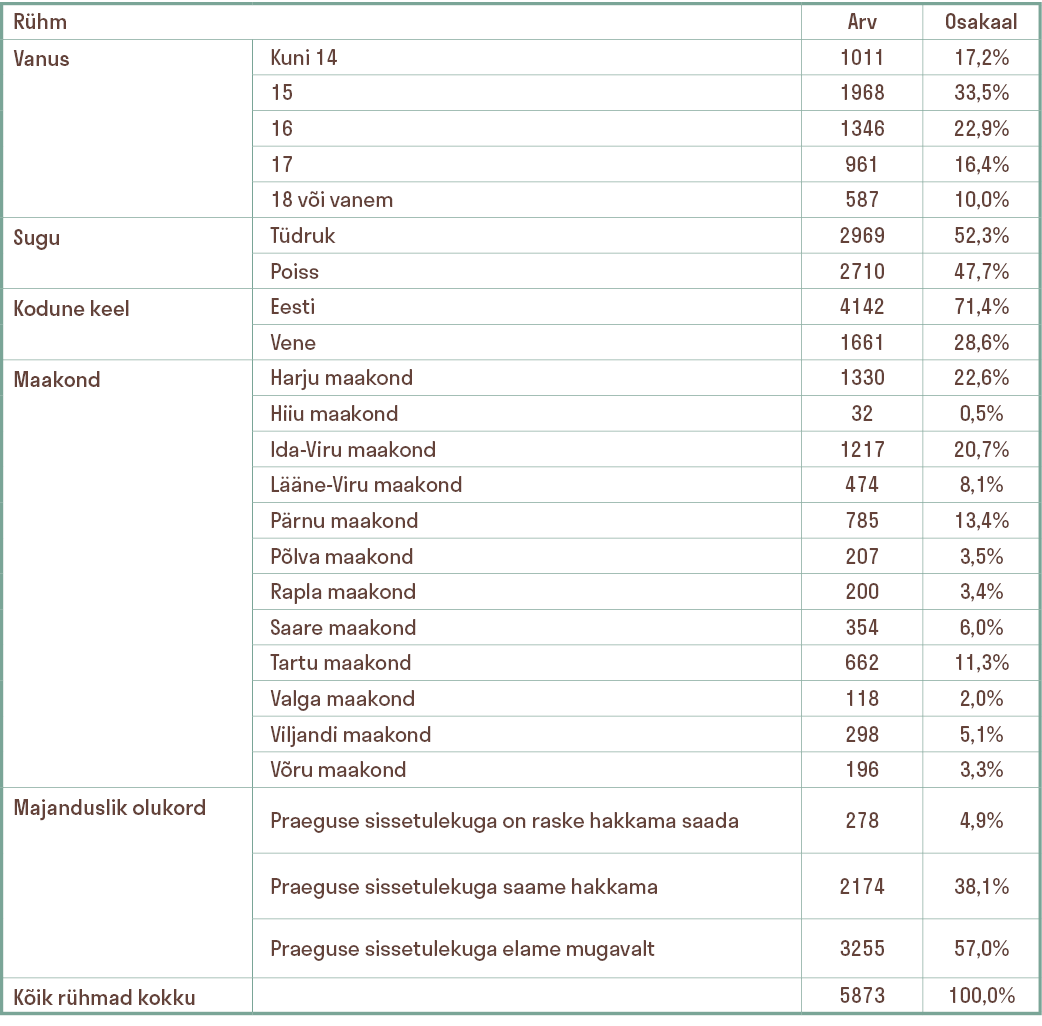
Data and methodology. ISRD4 (International Self-Report Delinquency Study, fourth wave) is an international study conducted in many countries, including Estonia. Its aim is to collect information on young people’s offending, victimisation experiences, and attitudes towards laws and social norms. In Estonia, the target group comprised all 13–18-year-old pupils in grades 8–11 attending general education schools, excluding special schools and sanatorium schools. Data collection took place in Estonian general education schools between 5 April and 7 June 2023. A total of 62 schools and 383 classes participated. After data cleaning and the removal of unreliable responses, the analysis included data from 5,873 pupils.
The survey was funded through the European Economic Area and Norway Grants 2014–2021 under the project ‘Establishment of specialised youth justice approach’. The research was conducted by researchers from the Department of Penal Law at the University of Tartu’s School of Law.